Stephan van Vuren
Hoe openbare veiligheidsinstanties een professioneel droneprogramma kunnen opbouwen: Lessen uit het sUAS-raamwerk van DHS NUSTL
Openbare veiligheidsinstanties wereldwijd vertrouwen steeds meer op drones om situationeel bewustzijn te verbeteren, hulpverleners te beschermen en besluitvorming te versnellen. Brandweerkorpsen gebruiken ze om structuurbranden in te schatten of om bosbranden in kaart te brengen. Politie-instanties zetten ze in om incidenten te beheren, zoek- en reddingsoperaties te ondersteunen of plaats delicten te documenteren. Noodmanagers gebruiken ze om schade op te nemen en operaties te plannen. Overal waar drones worden ingezet, bewijzen ze hun waarde.
Maar het opzetten van een droneprogramma dat veilig, verantwoord en duurzaam is, vereist veel meer dan alleen hardware aanschaffen en piloten trainen. Het vereist structuur. Het vereist governance. En het vereist documentatie die consistentie brengt in elke missie die een droneteam vliegt.
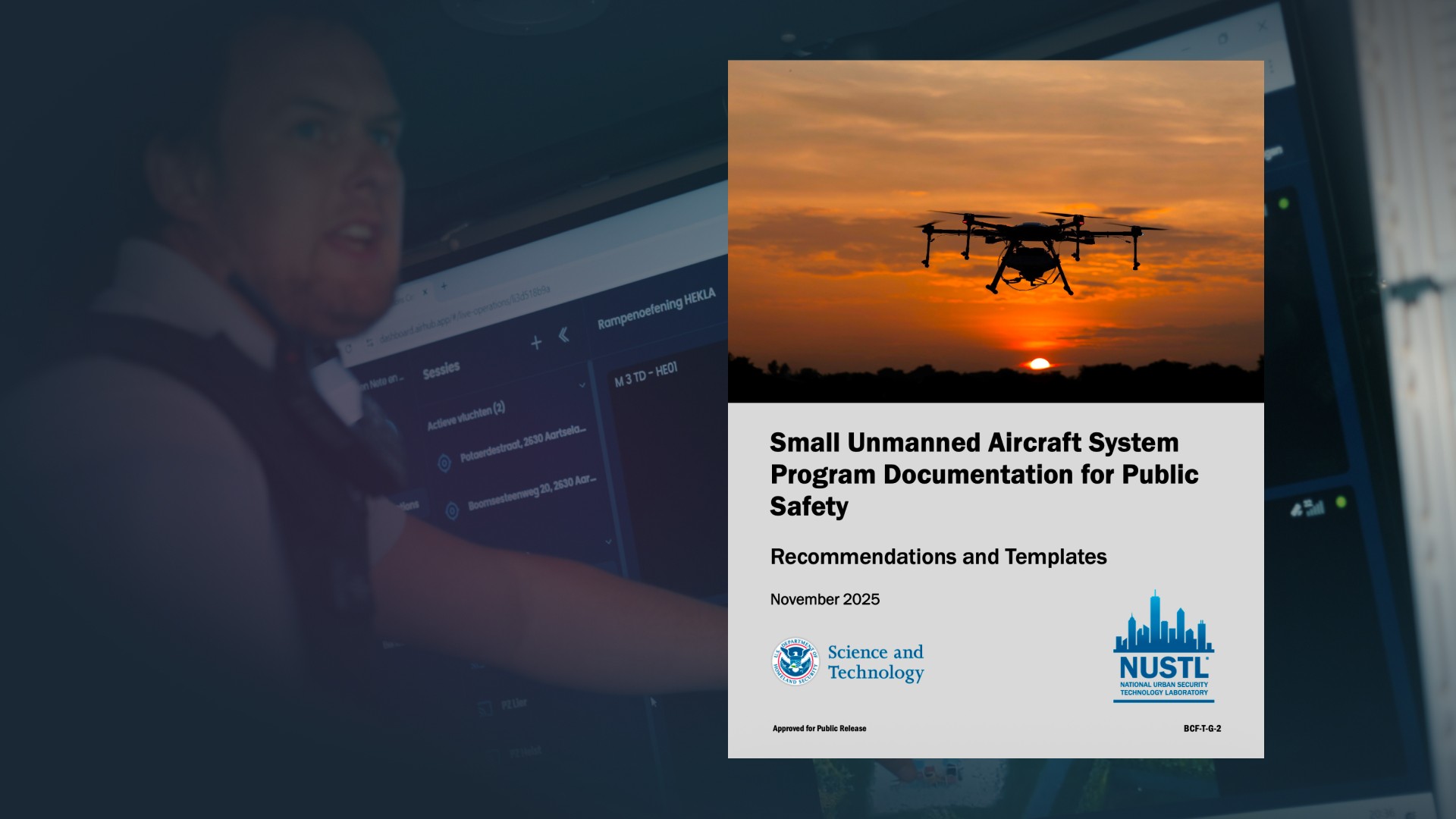
In november 2025 heeft het National Urban Security Technology Laboratory (NUSTL) van het Amerikaanse Department of Homeland Security een uitgebreide gids vrijgegeven met de titel 'Small Unmanned Aircraft System Program Documentation for Public Safety', die een van de meest complete kaders tot nu toe biedt voor instanties die een sUAS-programma willen opzetten of uitbouwen.
Bij AirHub zien we dagelijks hoe de meest succesvolle droneprogramma's, van kleine gemeentelijke afdelingen tot grote stedelijke agentschappen, degenen zijn die vroeg investeren in het bouwen van dit soort fundamenten. Hieronder vertalen we de belangrijkste richtlijnen uit het NUSTL-document naar een duidelijke, leesbare verhalende tekst voor leiders in de openbare veiligheid.
Waarom Documentatie Meer Dan Ooit Belangrijk Is
De meeste droneprogramma's beginnen met enthousiaste piloten en vroege succesverhalen. Een drone helpt een vermist persoon te vinden, brengt een bosbrand in kaart of biedt toezicht bij een tactisch incident. Maar naarmate het gebruik toeneemt, ontstaan inconsistenties: verschillende vluchtprocedures, verschillende registratie methoden, onduidelijke privacygrenzen of onzekerheid over wie een drone mag inzetten en onder welke omstandigheden.
Dit is waar documentatie essentieel wordt.
Een goed gestructureerde handleiding voor operaties is geen 'bureaucratie', het is het mechanisme dat zorgt voor:
Veilige vluchtoperaties, gebaseerd op luchtvaartnormen
Juridische en reglementaire naleving
Consistentie, zelfs als personeel verandert
Transparantie en verantwoording naar het publiek
Schaalbaarheid, vooral als programma's overstappen naar DFR of permanente paraatheid
Het NUSTL-kader is gebouwd rond die filosofie: geef agentschappen een blauwdruk die ze kunnen aanpassen aan hun eigen omgevingen, ongeacht hun grootte of missie.
De Ruggengraat: Beleid en Bestuur
Een van de krachtigste boodschappen uit de NUSTL-gids is dat een droneprogramma moet worden verankerd in duidelijk bestuur. Dat begint met een beleid dat doel, autoriteit en beperkingen definieert.
Het beleid legt uit waarom het programma bestaat - of het nu gaat om brandbestrijding, SAR, gevaarlijke stoffen incidenten, plaats delicten onderzoek of noodbeheer - en maakt expliciet dat drones alleen worden ingezet binnen gedefinieerde wettelijke en ethische grenzen. Het bevestigt ook dat piloten goed moeten worden opgeleid en gecertificeerd, en dat operaties de privacy, gegevensbescherming en burgerlijke vrijheden moeten respecteren.
Van daaruit wordt bestuur een kwestie van mensen: het definiëren van wie verantwoordelijk is voor wat.
Het NUSTL-document schetst een reeks rollen die samen de structuur van een professioneel droneteam vormen: een programmamanager, afstandspiloten, visuele waarnemers, een trainingsfunctionaris, een luchtruimcoördinator, een registratiebeheerder en iemand die verantwoordelijk is voor de communicatie met het publiek. Deze rollen kunnen worden gecombineerd in kleinere agentschappen, maar de verantwoordelijkheden moeten duidelijk worden beschreven.
Deze duidelijkheid is wat een programma veilig en voorspelbaar laat functioneren, zelfs wanneer de inzet hoog is en omstandigheden snel veranderen.
Training en Competentie: Verder dan het Certificaat
Het behalen van een Part 107-certificaat is slechts het begin. Operaties met drones voor openbare veiligheid zijn vaak complex, risicovol en tijdgevoelig. Ze vereisen besluitvorming onder druk, coördinatie met lucht- en grondunits en het vermogen om zich aan te passen aan veranderende omstandigheden.
NUSTL benadrukt het belang van terugkerende training, scenario-gebaseerde oefeningen en continue vaardigheidsbewaking.
Het introduceert ook luchtvaartprincipes die soms over het hoofd worden gezien in de dronewereld: Luchtvaartbesluitvorming (ADM), Crew Resource Management (CRM) en gestructureerde situationele bewustzijnstools zoals de PAVE en IMSAFE checklists.
Deze kaders helpen piloten om risico's vroegtijdig te herkennen, effectief te communiceren en de soorten fouten veroorzaakt door menselijk handelen, die de belangrijkste oorzaak blijven van luchtvaartincidenten, te voorkomen.
In ons werk bij AirHub zien we hoe transformatief deze mentaliteit is. Wanneer een droneteam luchtvaartniveau professionaliteit aanneemt, verbetert alles - vluchtveiligheid, missieresultaten en gemeenschapsvertrouwen.
Van Theorie naar Actie: Operationele Procedures Bouwen
Beleid beschrijft wat het programma moet doen. Procedures beschrijven hoe het te doen.
Het NUSTL-document bevat een uitgebreide set procedures die elke fase van de vlucht beslaan, van 24 uur voor het opstijgen tot de laatste nabespreking na de vlucht. Deze omvatten:
Voorvliegcontroles
Apparaat opstelling
Missieplanning
In-vlucht gedragsregels
Landingsprotocollen
Validatie van gegevens na de vlucht
Noodprocedures
De waarde van deze procedures is dat ze ambiguïteit verwijderen. Ze zorgen ervoor dat elke piloot dezelfde volgorde, dezelfde communicatieprotocollen en dezelfde normen volgt voordat een vliegtuig boven een brandterrein of stedelijk gebied wordt gelanceerd.
Dit maakt ook nabesprekingen na de actie mogelijk. Wanneer procedures duidelijk en consistent zijn, wordt het mogelijk te begrijpen wat goed ging (of wat fout ging) en continu te verbeteren.
Voorbereiden op het Onverwachte: Noodprocedures
Een van de sterkste bijdragen van de DHS/NUSTL-gids zijn de gedetailleerde noodprocedures. Deze behandelen precies de soorten eventualiteiten waar openbare veiligheidsvliegers het meeste voor vrezen:
Verlies van verbinding met het vliegtuig
GPS-uitval
RF-interferentie in stedelijke of luchthaventerreinen
Stuwkracht- of vluchtcontrolestoringen
Situaties met een lege batterij
Inbreuken op het luchtruim
Vogelbotsingen
Ontkomen van de drones
Elke procedure is geschreven als een stapsgewijze checklist die piloten terug in een gestructureerde reactie leidt onder druk.
Deze tools zijn van onschatbare waarde, en we helpen vaak instanties om ze direct te vertalen naar hun SOP's of naar snel verwijderbare kaarten voor veldoperaties.
Onderhoud, Apparatuur en Levenscyclusbeheer
Dronevloten voor openbare veiligheid zijn niet langer kleine collecties standaard quadcopters. Steeds vaker bedienen instanties een mix van:
Multirotors
Vastevleugelplatforms
Thermische en optische payloads
LTE/5G-verbonden drones
Afstandsoplaadstations
Commando- en controleplatforms
Docksystemen voor DFR
Met deze complexiteit komt de behoefte aan gestructureerd onderhoud en asset management.
NUSTL benadrukt regelmatige inspecties, onderhoudslogboeken, gecontroleerde opslag, batterijgezondheidsbeheer en maandelijkse operationele audits. Zelfs kleine problemen - een versleten propeller, verouderde firmware of slecht opgeslagen batterij - kunnen escaleren naar veiligheidsrisico's.
Een volwassen droneprogramma onderhoudt een volledige traceerbaarheid van elk luchtframe, elke batterij, elke payload en elke reparatie.
Gegevens, Cyberbeveiliging en Privacy
Naarmate drones steeds meer vliegende camera's, sensoren en gegevensverzamelaars worden, moeten instanties ze behandelen als onderdeel van een breder digitaal ecosysteem. NUSTL besteedt een gehele sectie aan cyberbeveiliging en gegevensbeheer, en benadrukt het belang van het beschermen van:
Commando- en besturingsverbindingen
Vastgelegde gegevens
Opgeslagen media
Netwerkverbindingen
Cloud-gebaseerde of interne integraties
Dit omvat versleuteling, toegangscontrole, software-updates en afstemming met organisatiebrede cyberbeveiligingsbeleid.
Even belangrijk is de bescherming van privacy en burgerlijke vrijheden. Openbaar vertrouwen is essentieel, vooral voor politie- en gemeentelijke agentschappen. Progressieve programma's gaan verder dan minimale naleving en informeren actief de gemeenschap over hoe drones worden gebruikt, wanneer ze worden ingezet en hoe gegevens worden beheerd of verwijderd.
Het Programma Onderhouden: Begroten en Samenwerken
Een droneprogramma is geen eenmalige investering; het is een doorlopend vermogen. NUSTL beveelt aan een meerjarige begroting te maken die rekening houdt met:
Vervanging van apparatuur
Kosten van batterijlevenscyclus
Softwareabonnementen
Training en terugkerend onderwijs
Onderhoud en reparaties
Programma-audits
Nieuwe missiemogelijkheden
Samenwerking is ook van cruciaal belang. Droneprogramma's ondersteunen - en worden ondersteund door - naburige agentschappen, staatsnoodmanagementkantoren en federale partners. Duidelijke procedures helpen te definiëren wanneer en hoe deze samenwerkingen plaatsvinden.
Conclusie: Documentatie als Fundament voor Vertrouwen en Uitmuntendheid
Droneprogramma's voor openbare veiligheid evolueren snel, bewegen richting continue operaties, DFR, geautomatiseerde dispatch en diepere integratie met commando- en controlesystemen. Deze evolutie biedt buitengewone kansen, maar alleen voor agentschappen die drones benaderen met de nauwkeurigheid van de luchtvaart.
Het DHS/NUSTL-kader biedt een waardevolle blauwdruk. Het helpt agentschappen beleid te maken, teams te structureren, procedures te standaardiseren, veiligheid te waarborgen, apparatuur te beheren, gegevens te beschermen en continu te verbeteren. Het is het soort richtlijn dat een droneprogramma verheft van 'goed' naar 'professioneel'.
Bij AirHub helpen we openbare veiligheidsinstanties deze principes in de praktijk te brengen - documentatie op te bouwen, SOP's te ontwikkelen, piloten te trainen, DFR-concepten van operaties te ontwerpen en ons AirHub Drone Operations Center in te zetten dat drone-operaties veilig, compliant en schaalbaar maakt.
Als uw instantie op zoek is naar het creëren of verfijnen van een sUAS-programma, staan wij u graag bij.