Client:
Frivilliga Flygkåren (FFK)
Industry:
Public Safety
Location:
Sweden
Purpose:
FFK used AirHub to give all coordinating parties a shared live view of crowd movement and traffic around the FIS Cross-Country Skiing World Cup venue in Falun in real time.
About:
About FFK Frivilliga Flygkåren (FFK) is Sweden's voluntary aviation corps, with over 2,500 members including more than 800 pilots and observers across the country. FFK provides aerial support to government agencies and emergency services, from search and rescue to infrastructure inspection and large-scale event security.
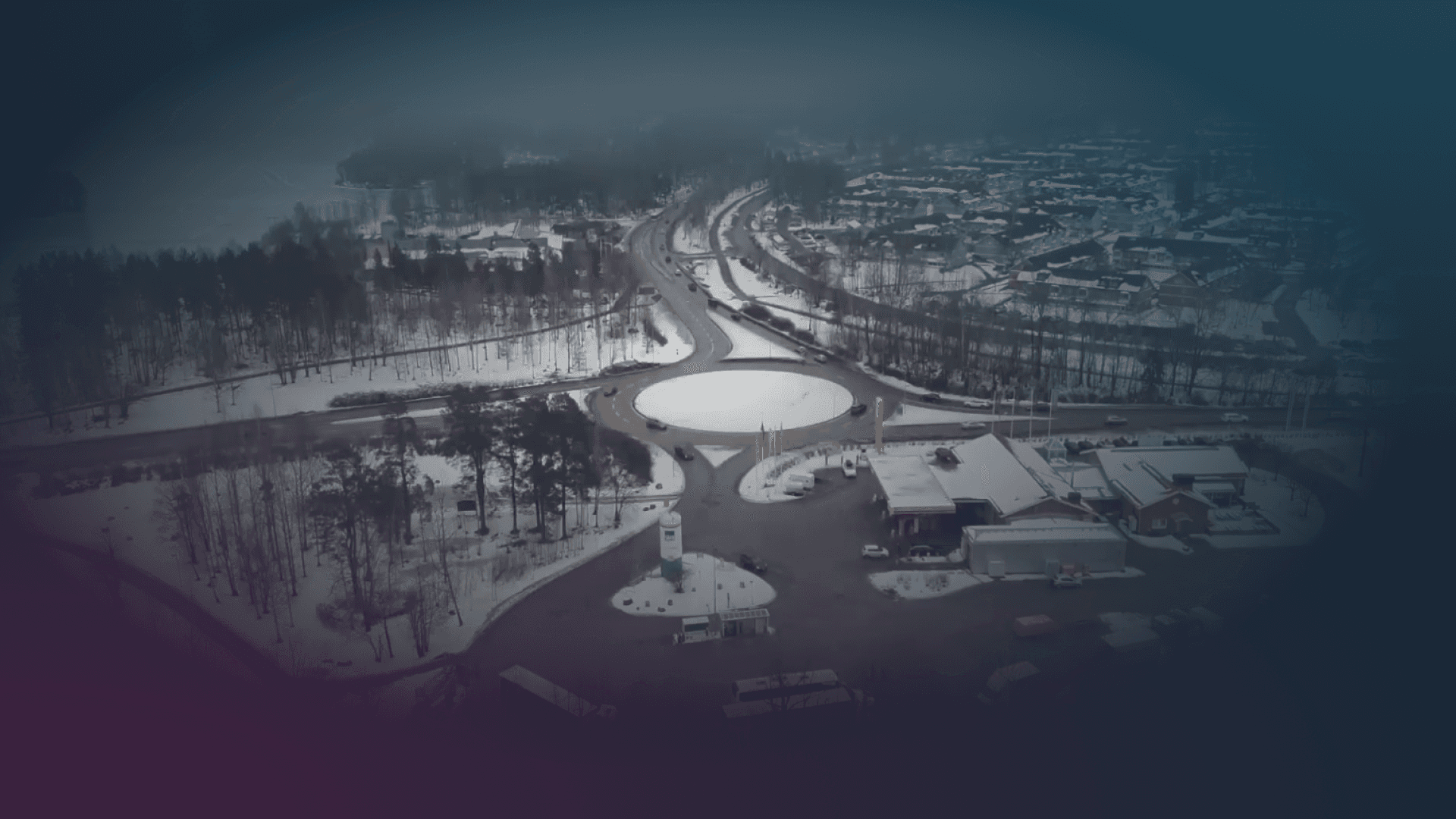
When thousands of spectators descend on a race venue, safety and traffic coordinators need every agency involved to see the same picture at the same time. That was the core operational goal for Frivilliga Flygkåren (FFK), Sweden's voluntary aviation corps, during the FIS Cross-Country Skiing World Cup in Falun on 28 February and 1 March 2026.
About FFK
Frivilliga Flygkåren (FFK) is a Swedish voluntary defence organisation with over 2,500 members, including more than 800 pilots and observers spread across the country. FFK operates as an aerial resource for Swedish society during emergencies and large-scale events, working alongside the Swedish Civil Contingencies Agency, county administrative boards, rescue services, and the Swedish Armed Forces. Their drone unit handles a wide range of operations, from search and rescue to infrastructure inspection and event security.
The challenge: coordinating multiple agencies around a major event
Large public events create a specific set of operational challenges for safety teams. Traffic flows are unpredictable, spectators spread across wide areas, and multiple agencies, each with their own command structure, need to act on the same information in real time.
For the World Cup event, FFK's primary task was to get a clear view of crowd movement and traffic around the venue and share that situational awareness with partner organisations: including relevant authorities and Trafikverket, the national transport authority, which had set up a dedicated coordination centre in Gävle.
Lars-Göran, Flight Chief and NPFO at FFK, describes the core challenge plainly: "Finding good spots to position teams and coordinating between operators."
Before this kind of setup, coordination relied on static photography and radio communication, with each agency working from incomplete visual data. Information had to be described verbally and interpreted separately by each party, leaving significant room for miscommunication.
The solution: shared live video through AirHub
FFK deployed drones with livestreaming capability, managed through AirHub's platform. Rather than sharing still images after the fact, all parties could watch the same live feed simultaneously. That included FFK's command team in Falun, the police officers positioned alongside them, and the Trafikverket coordination team in Gävle.
Lars-Göran explains the shift: "We got a greater picture of everything. It was also easier to share information between those responsible in the HQ."
The setup was deliberately straightforward. FFK shared a physical operations space with the relevant authorities on the ground, so they could see the drone feed directly on FFK's screens. Trafikverket, based in a different city, received the same live image at the same time. Communication continued through the established Rakel radio network, a system already embedded in Swedish emergency coordination. The livestream gave existing workflows a shared visual foundation.
"Because we saw the same picture, it was easy for us to talk directly," Lars-Göran notes. "Trafikverket, who also had a coordination centre in Gävle, got the same picture as we had in Falun during the same time."
What actually happened on the day
Traffic around the venue turned out to be lower than expected. Trafikverket had anticipated heavier flows, and as a result, there were no critical incidents requiring rapid intervention.
This is worth noting honestly: the value of shared situational awareness often shows up in the absence of confusion, in decisions made calmly with everyone aligned, rather than scrambling to piece together a picture from separate sources.
The event went smoothly, and having every agency working from the same live view was a meaningful part of that.
Looking beyond major events
The World Cup deployment gave FFK a clear view of how using drones and AirHub's shared livestream platform can scale into day-to-day work.
Lars-Göran points to remote pilot oversight as a particularly strong use case, specifically the ability to monitor live drone operations from a distance: "We can see a lot of potential in this, due to the fact that we can see when our pilots are flying. We can set up perimeters for them to fly in and give them instructions from a long distance. This makes it possible for us to have a safe operation."
For an organisation like FFK, with pilots and observers distributed across the whole of Sweden, the ability to supervise, instruct, and coordinate remotely is a significant operational advantage. Whether the mission is infrastructure inspection, wildlife monitoring, or emergency response support, AirHub gives FFK's leadership real-time visibility over what is happening in the field, without needing to be physically present.
In Lars's own words
"AirHub makes it possible for us to coordinate a safe operation."
Lars-Göran, Flight Chief / NPFO, Frivilliga Flygkåren (FFK)
Curious what this could look like for your organisation? Book a demo and see how AirHub supports real-time drone coordination at scale.