Stephan van Vuren

Stephan van Vuren

AirHub expands into defence: introducing MilHub and SecHub
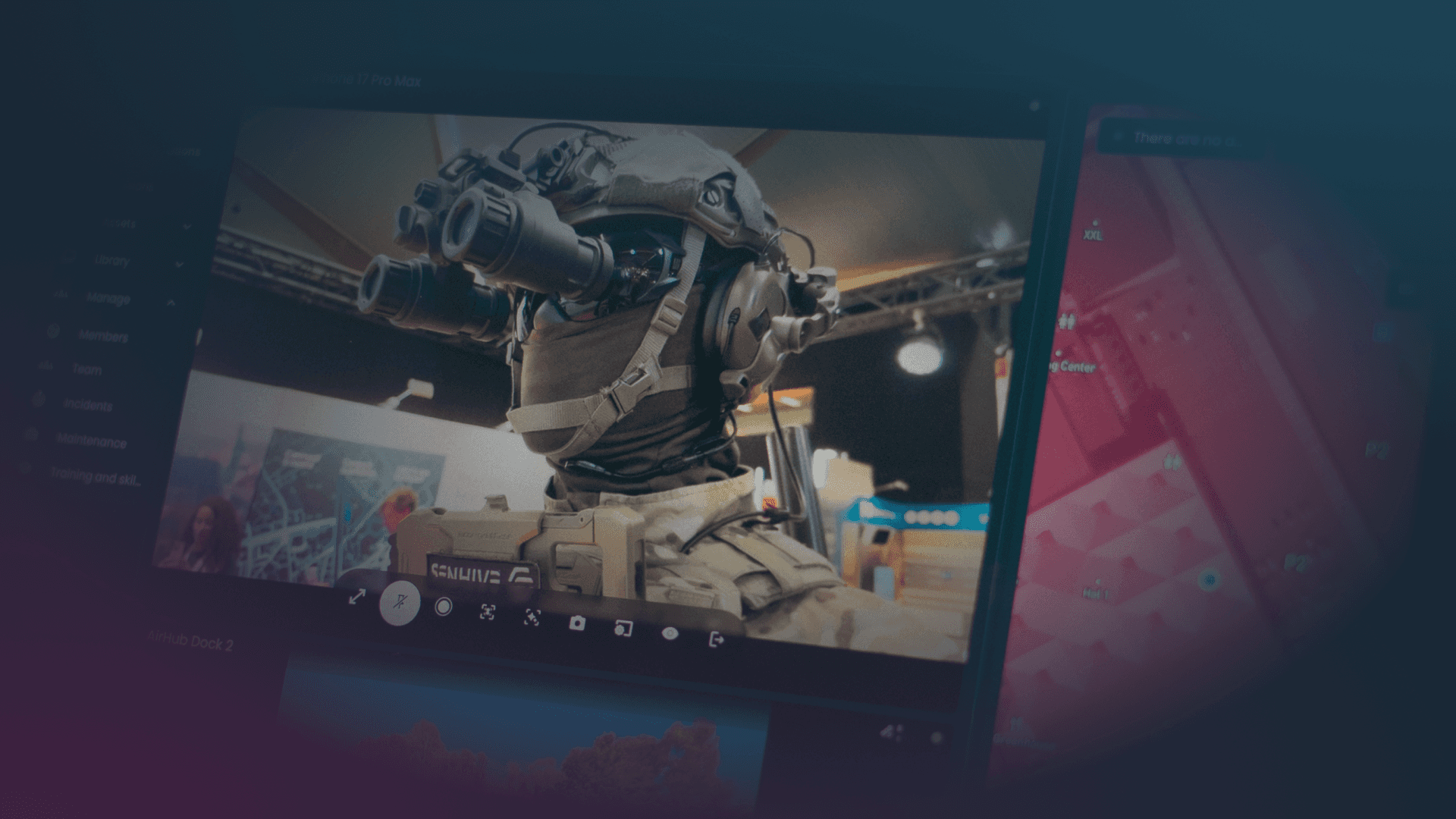
AirHub, SecHub and MilHub as one integrated software layer

Following our recent €4.4 million Series A funding round, led by Keen Venture Partners, Runway FBU, LUMO Labs, and Lumeaux, we have been asked one question more than any other:

What is next for AirHub?

The answer is a natural evolution and a deliberate step forward.

We are expanding into defence. It is a continuation of what we have been building from day one.

The world around us has changed

Over the past years, AirHub has grown into a drone operations platform that enables safe, compliant, and scalable missions for public safety, security organisations, and critical infrastructure operators.

The operational environment around these users has fundamentally changed. Airspace is becoming more complex. Threats are evolving faster. The line between civil and defence domains is blurring, especially when it comes to unmanned systems.

Drones now sit inside a broader ecosystem of robotics, sensors, and data flows that define situational awareness.

Across Europe there is a growing realisation that we cannot rely solely on external technologies for this layer of our security. We need sovereignty.

Why we are building MilHub and SecHub

This is the context in which we are introducing two new products: MilHub and SecHub. Both are built on the foundation of AirHub and designed for new operational realities.

MilHub: sovereign ISR and robotic orchestration

MilHub is our defence-focused platform. At its core, it is an ISR (Intelligence, Surveillance, and Reconnaissance) robotics platform that combines:

  • orchestration of multiple robotic assets across air, land, and eventually sea

  • real-time data fusion

  • mission-centric situational awareness

Equally important is the boundary we set around it. AirHub will not be deployed on the front lines of active conflicts, and we are focused only on defensive systems. MilHub is designed to protect.

Our focus is on:

  • national and European borders

  • ports and coastal areas

  • military bases and secured zones

  • NATO-aligned defensive operations

These are the environments where situational awareness, coordination, and control of unmanned systems are critical for defensive security. This aligns with a broader European need: building sovereign capabilities that allow us to operate independently, securely, and responsibly.

SecHub: counter-drone and airspace awareness

SecHub launches alongside MilHub. MilHub focuses on robotic orchestration. SecHub focuses on understanding the airspace itself.

SecHub is a hardware-agnostic data fusion platform for counter-drone operations. It combines inputs from multiple sensor types, including RF, radar, EO/IR, and Remote ID, into one unified operational picture.

The platform's value sits in context. Is a drone compliant? Is it a risk or a threat? What action is appropriate, and who is responsible?

SecHub connects detection to decision-making through workflows, data correlation, and integration with existing operational systems.

Like AirHub, SecHub is designed for:

  • public safety organisations

  • security providers

  • critical infrastructure operators

And for:

  • border security

  • military bases

  • high-risk environments

One ecosystem, one software layer

The vision behind these new products remains consistent. AirHub, MilHub, and SecHub form a single, integrated software layer.

  • AirHub enables operations through the Drone Operation Center

  • SecHub provides airspace awareness and threat insight

  • MilHub orchestrates robotics in defence contexts

Together they create a unified platform for managing unmanned systems and the environments they operate in. The future lies in connected systems that combine operations, awareness, and control.

A European approach to defence technology

Our expansion into defence is guided by three principles.

The first is sovereignty. We are building a European software layer that can operate independently of non-European dependencies, aligned with GDPR, ISO 27001 and 9001 (see our Trust Center), U-Space, and emerging security frameworks.

The second is responsibility. We position ourselves deliberately in the defensive domain. Protecting borders, infrastructure, and people is what guides every product decision.

The third is interoperability. Our platforms are designed to integrate with existing systems, standards, and partners across NATO and European ecosystems. We connect what is already in place.

What this means for AirHub

This next phase scales our original mission, from enabling drone operations to enabling secure, coordinated, and sovereign use of robotics at scale.

The Series A funding allows us to accelerate that step:

  • expanding our product capabilities

  • strengthening our technical architecture

  • deepening our presence in Europe and allied markets

Most importantly, it allows us to take responsibility for a layer that is becoming critical, the layer where robotics, data, and decision-making come together.

Looking ahead

In the coming years, every organisation responsible for safety and security will rely on a combination of unmanned systems, sensor networks, and real-time data fusion.

The real challenge today is how these systems are connected, governed, and trusted.

With AirHub, MilHub, and SecHub, we are building that foundation. We are building it for protection, resilience, and sovereignty.

If you are responsible for security, defence, or critical infrastructure in Europe and want to understand how AirHub, MilHub, and SecHub fit your operations, schedule a demo with our team.
If you are responsible for security, defence, or critical infrastructure in Europe and want to understand how AirHub, MilHub, and SecHub fit your operations, schedule a demo with our team.
Ready to see AirHub in action?

Book a demo and find out.

Related articles

A drone flying inbetween a lot of hot air balloons

Content

Safely Integrating Drones in Society

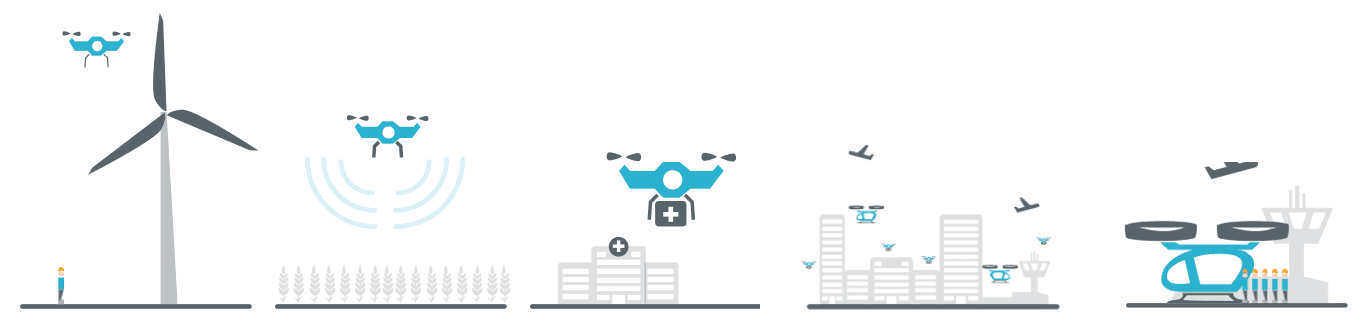
Our mission at AirHub is to safely integrate drones into our society. We believe in the potential of drones to fulfil tasks in a safer, quicker, better and more efficient way.

Drones are steadily becoming a tool for more and more companies and public organisations across the globe. Drones are used in a variety of sectors ranging from smart #agriculture to #energy and #insurance to public safety & #security.

The drone market is still at the beginning of a long term growth path - SESAR Joint Undertaking

Over the next years we will continue to see an enormous increase in the number of applications such as #delivery for e-commerce platforms and urban air mobility (#UAM) through the use of drone #taxi's. At AirHub we guide companies, public organisations and governments in safely integrating drones in their workflow, the airspace and our society.


Online training and operational support

The first step to get your drone operation up and running is to train your crew on the missions that they are going to perform. It is important for pilots and observers to gain knowledge about #regulations, #weather and external factors, principles of flight and more. It is crucial however is to provide your crew with practical training as well. Pilots should be able to handle the aircraft under normal, abnormal and emergency situations.

In the next couple of years more and more flights will be executed beyond the visual line of sight of the pilot (#EVLOS) or even the observer (#BVLOS). These flights will mostly be automated, and the crew will have a different role and responsibility compared to manual flights. At AirHub we can provide your crews will all the necessary education for current and future missions.


Drone Operations Management Software

Not only the number of companies and organisations that operate drones is increasing, also the frequency with which they use their drones is increasing at an exponential rate. With this the need for safe and efficient flight planning, data processing and flight logging is rising as well.

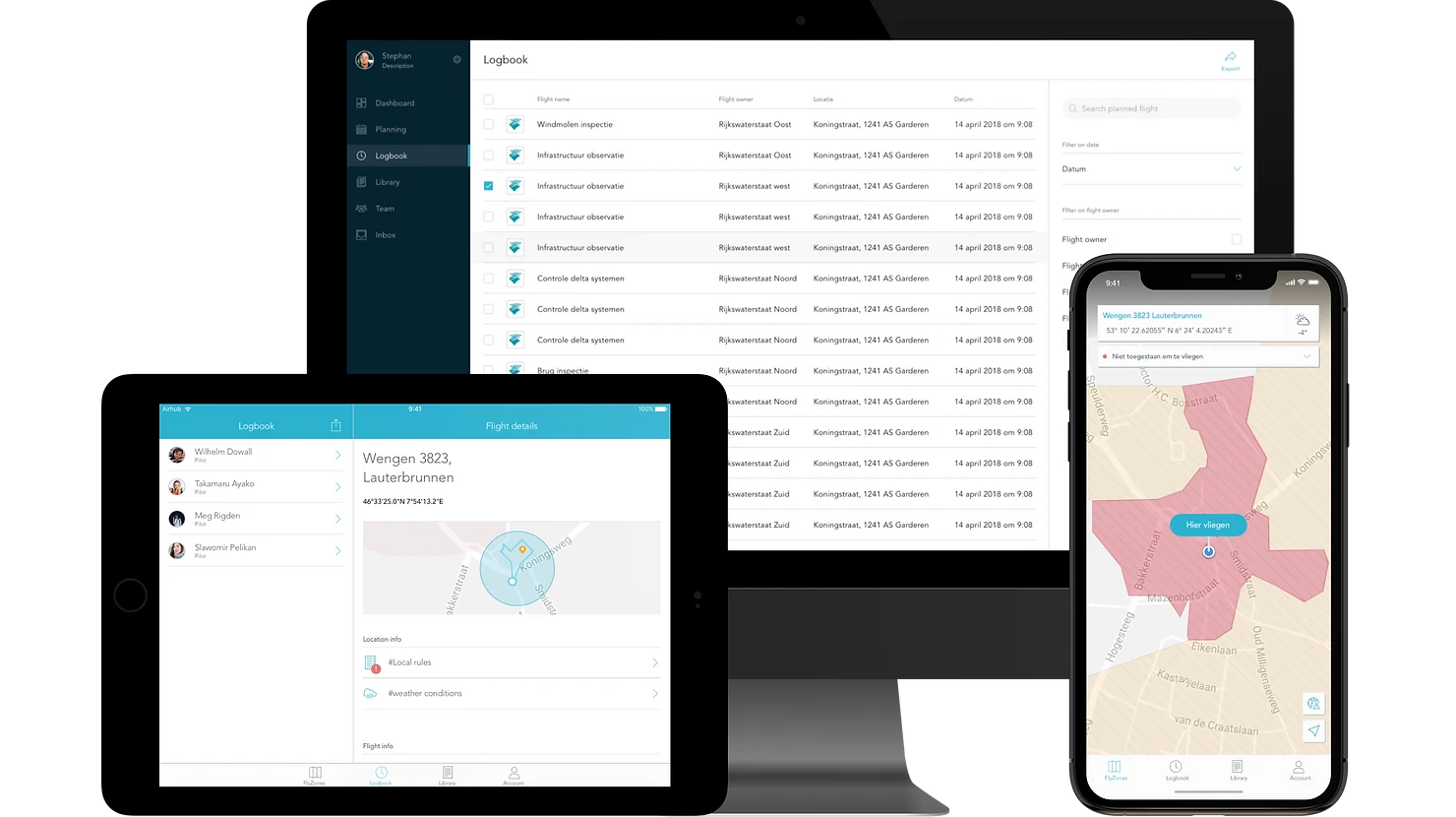
With AirHub's Drone Operations Management Platform operators can legally, safely and efficiently plan, execute and manage their operations. Planners can prepare a flight plan at the office using the online dashboard so that it is available to the flight crew once they arrive on site. Crews can then send their flight plan to air traffic control over the build in UTM (U-Space) connection to get permission for their mission. Both the air traffic controller and the flight operations manager back in the office can track the drone once it is in the air. When the drone has landed, all data is automatically saved in the logbook and send to the AirHub Cloud.


Policy consulting and regulatory support

At AirHub we have guided both European, national and local regulators with establishing their policies for drones. Wether it is providing input to the new European regulations, implementing these regulations on a national level or developing guidelines on #privacy, environmental protection or (data) security, our consultants will provide you with valuable knowledge and experience.

We are specialised in aviation and drone specific regulatory frameworks, Unmanned Traffic Management (UTM) and U-Space, SORA and Standard Scenarios, Operations Manuals and more. Let us know your questions and we will find the answers for you.


How AirHub can help

At AirHub we have guided governments and organisations across various industries with practical solutions. Contact us to take advantage of the experience and expertise of our consultants, download the AirHub Drone Operations Management application or start today with one of our online trainings.

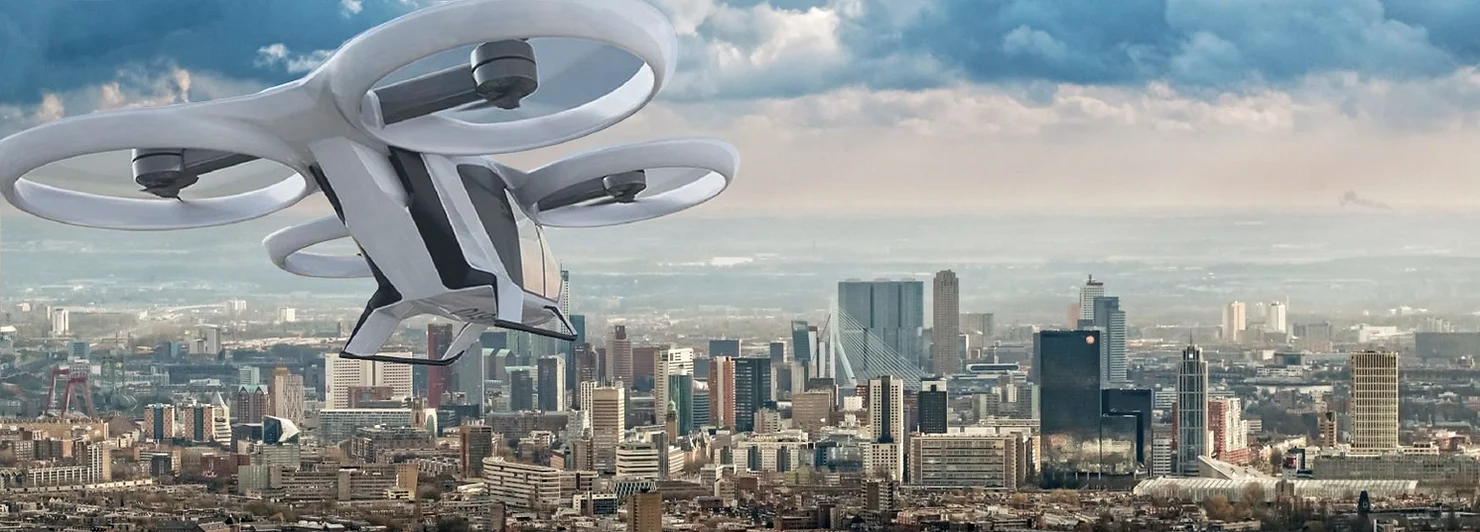
A certified category manned drone flying over a populated residential area

Content

Defining the Future of Urban Air Mobility

The Dutch Drone Delta - founded by AirHub and KLM Royal Dutch Airlines - brings together key players to enable the full potential of drones and Urban Air Mobility in The Netherlands.


04-12-2019 Amsterdam Drone Week - #RAI Amsterdam

Unmanned Aircraft Systems (UAS) increasingly start to impact our lives. Today #drones are already used in various industries such as #inspection, #agriculture and #construction. Within the next decade we will also see the use of drones for package #delivery and even for the transportation of freight and humans - Urban Air Mobility.

"Drones overall will be more impactful than I think people recognize, in positive ways to help society.” - Bill Gates

In early 2019 KLM joined forces with AirHub to look at the possibilities of transferring passengers from #Schiphol Airport to their final destination with electric unmanned aircraft (#eVTOL). To realize these ambitious plans and to create sustainable social, economic and environmental impact with drones, a comprehensive roadmap was created and an ecosystem of partners was developed.


Dutch Drone Delta

With this roadmap the partners within the ecosystem want to close the gap between present-day - mostly manually piloted - Visual Line Of Sight (VLOS) operations and Urban Air Mobility (#UAM). Therefore AirHub included 5 tracks in the roadmap that focus on social embracement, autonomous long distance flights, Unmanned Traffic Management (UTM), drone delivery and Urban Air Mobility. In each track the partners will implement various concrete use cases, such as surveying flights by #Rijkswaterstaat within the Port of Rotterdam (Rotterdam CTR) with a focus on social impact, legal possibilities, technical challenges and economic effects within these use cases.


Track 1: Social Embracement

The fact that drones can provide a lot of economic benefits does not mean that they will automatically be embraced by our society. Especially when working towards package delivery and the transportation of cargo and humans in urban environments there will be many factors that will have to be taken into account (e.g. #noise and #privacy). It is therefore of great importance that the social dialogue will be started as early as possible in this process.

Together with other partners such at the City of Amsterdam and the Dutch government the Dutch Drone Delta ecosystem will work on the social embracement of drones to create not only sustainable economic impact, but social and environmental impact as well.


Track 2: Autonomous Long Distance Flights

The first technical step on the path to Urban Air Mobility is the realization of autonomous long distance (beyond visual line of sight, #BVLOS) flights. Today both regulatory and technical hurdles exist that need to be overcome. To gain thrust from both legislators, society and end users a lot of experimentation and test have to be conducted, both on the required #hardware and #software.

Together with partners the Dutch Drone Delta ecosystem will work on improving the techniques required for the realization of #autonomous long distance flights whilst keeping in mind social, legal, environmental and commercial requirements.


Track 3: U-Space & Unmanned Traffic Management

Today the biggest part of aviation takes place at relatively high altitudes. Only near aerodromes there is a real interaction between the sky and the surface we live on. With the introduction of drones into our low level airspace this will change. Drones will have to interact with the 4D world we live in and should be able to deal with #buildings, #weather, temporary obstacles and #airspace closures.

U-Space or Unmanned Traffic Management (#UTM) will provide the answer for many of these challenges. The Dutch Drone Delta ecosystem will work on the Dutch implementation of U- Space/UTM by Air Traffic Control The Netherlands (#LVNL) and other airspace administrators such as the municipality of Enschede (#Space53). Crucial network solutions, such as #5G will be provided by #KPN to facilitate these services.


Track 4: Drone Delivery

Delivery of high value, high priority packages, such as blood samples or automated external defibrillators (#AED), in urban areas will be the first kind of aerial mobility in our cities. To realize this step many technological innovations will be necessary, both on the techniques of the aircraft, payload and sensors but on the infrastructure of cities as well. Furthermore #insurance will play an important role in these kinds of operations, the Dutch Drone Delta ecosystem will be supported in this by our partners a.s.r. verzekeringen and Achmea.

It is expected that unmanned aircrafts for delivery will first only fly on predetermined routes between two points, so corridors in the sky will have to be created. The ecosystem will work together with the (local) government(s) and partners to create the necessary techniques and infrastructure to facilitate this.


Track 5: Urban Air Mobility

The realization of transport of cargo and passengers by electric unmanned aerial vehicles will be the point on the horizon for the Dutch Drone Delta ecosystem. It will be the end of a long series of steps that will prove that this new form of air-modality is safe, economically viable and socially desirable.

Unmanned cargo and passenger aircraft will be one of the solutions to the problems we face today with congestion and pollution in our cities and on our roads. It will give us a safer, faster and more efficient form of transport that will provide both large social and economic benefits to The Netherlands. In this track the Dutch Drone Delta ecosystem will work on the basic foundations that are necessary for UAM such as, skyports, charging infrastructure and integration into existing mobility flows. Partners such as #Antea Group and Royal #NLR will provide support the ecosystem in this with their extensive knowledge and experience.

About AirHub: Our mission at AirHub is to safely, legally and efficiently integrate drones into our society. We facilitate this by helping companies with setting up their drone operation and advising governments and public organisations about their drone and UAM policies. With the AirHub Drone Operations App and our Drone Operations Center (including our #SORA tool) we enable drone operators to plan, fly and log their drone missions.

AirHub will, together with #Connekt, provide the daily project management of the Dutch Drone Delta ecosystem. Contact us at info@airhub.nl for more information.

AirHub's software open on a monitor, a tablet and a phone

Content

Careers: Internship Software Developer

At AirHub we develop a new generation of applications focussed on the professional use of drones. The main product we are working on is our Drone Operations Center, this will enable enterprises to operate and manage their fleet of drones straight from the office.

As an intern you will work on all aspects of our application development and will work closely with our senior developers who will motivate you to continuously learn and implement the latest technologies. You will learn to work with pixel perfect designs and the latest SDK’s and API of various drone manufacturers.

Working at AirHub not only gives me the opportunity to develop myself, but to set the standard for a whole new industry.

The AirHub team is a team of experts that collaborates closely and is passionate about the solutions we build. We like to learn from each other and want improve every day, but most of all we have pleasure in what we do and are proud of the solutions we create!


Who we are looking for?

We are looking for someone who wants to work on innovative applications on the crossroad of mobile development and drones. Experience with drones would be appreciated, but most of all we would like you to be enthusiastic and eager to learn, this is what we expect from you:

  • Show initiative, be flexible and take responsibility

  • Work independently and cooperate in a team

  • Analytical, accurate, innovative and client oriented

  • Ambitious, enthusiastic and result driven


What do we offer?

We are a young company so you will have the opportunity to grow with us over the coming years. Besides that, we offer:

  • Your own drone of course

  • An internship compensation and other benefits

  • An inspiring working environment

  • A young team of colleagues

  • Lots of learning and growth opportunities

Internship location

Groningen - Zuiderpark 7


Is this something you’re looking for? Just get in touch by sending your CV to info@airhub.nl or give us a call and we will take it from there.