•

Nerissa Goedhart
AirHub partners with DronePort Rotterdam on critical infrastructure drone operations

Critical infrastructure drone operations are quietly becoming one of the busiest corners of the drone industry, and ports are leading the way. Every crane, quay and pipeline is now a candidate for drone inspection, and every drone flying nearby has to fit into a coastline that is already thick with air traffic. That is the environment AirHub is stepping into, with a new partnership with DronePort Rotterdam, which orchestrates the route from strategic challenge to scalable practice for autonomous and uncrewed systems. Using Rotterdam as a development and validation environment, DronePort Rotterdam connects public and private partners across technology, policy, operations and knowledge.
Critical infrastructure drone operations are getting harder to ignore
DronePort Rotterdam works at the point where port, airport, city and region meet. That is where the connection with AirHub becomes relevant. DronePort Rotterdam is working on the wider conditions required to bring autonomous systems into real port operations: from governance and validation to digital infrastructure, safety, security and operational integration.
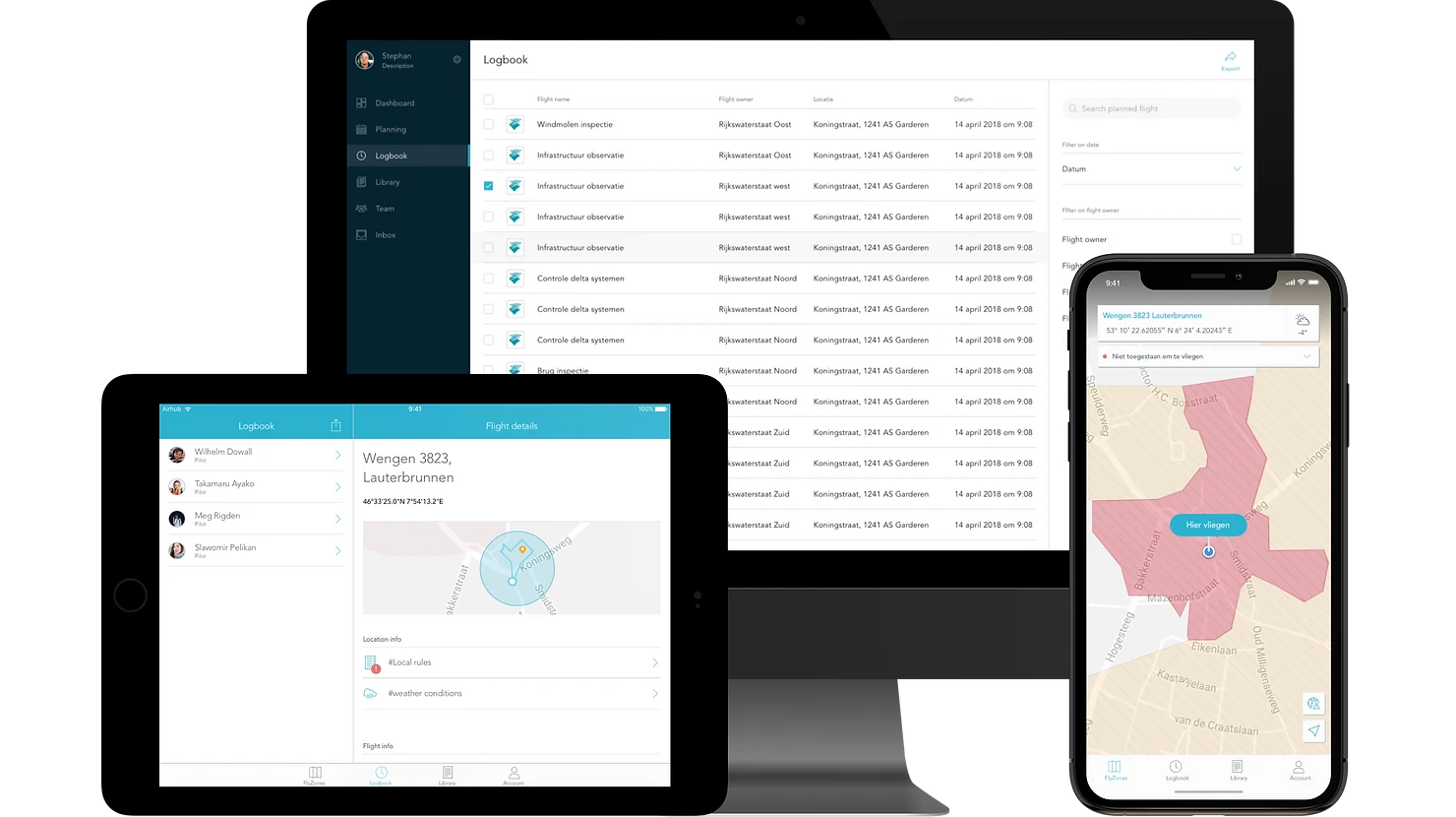
AirHub adds a specific capability to that environment. Its platform connects mission planning, live operations, compliance and operational data, helping operators manage increasingly complex autonomous operations through a single operational layer.
For AirHub, the fit is straightforward. Ports fall under the same critical infrastructure category as the energy, transport and industrial sites AirHub already supports, and the operational pressure is the same: more drones in the air, more data to bring into a single operational picture, and less room for a security gap.
"Ports are becoming one of the most demanding environments we work in. More drones, more regulation, and more at stake if something goes wrong. That is exactly the kind of complexity AirHub was built to handle."
Stephan van Vuren, co-CEO, AirHub.
For DronePort Rotterdam, the partnership strengthens an important part of the operational architecture around autonomy. The challenge is not simply getting more drones into the air, but creating an environment in which autonomous missions can be planned, authorised, monitored and integrated into normal operations while maintaining safety, security and control.
Why critical infrastructure drone operations need a European platform
For ports and other critical infrastructure operators, data sovereignty, deployment control and compliance are no longer secondary IT considerations. As operations become more digital and autonomous, they increasingly become part of operational resilience itself. That is the standard AirHub was built to meet. AirHub is ISO 27001 and ISO 9001 certified, operates in line with GDPR and European data protection requirements, and can run on-premise or in a private cloud for organisations that cannot accept sensitive operational data leaving their own infrastructure.
That matters more in a port than in most places. A quay, a refinery or a power grid is also a target, and the operators responsible for it are increasingly expected to show exactly where their data lives and who can reach it. We wrote about what that means for European drone software in more detail earlier this year.
AirHub and DronePort Rotterdam at DroneHorizon 2026
The partnership is being marked at DroneHorizon, part of a multi-year collaboration between Port of Rotterdam, Port of Antwerp-Bruges, Hamburg Port Authority, DronePort Rotterdam and The Beacon, to accelerate the transition from individual pilots and deployments towards scalable autonomous and uncrewed operations across European ports. The 2026 edition takes place on 15 September in Antwerp, opening a three day Port of the Future Week focused on autonomous and sustainable technology in ports.
It is a fitting place to formalise the collaboration. DroneHorizon draws exactly the mix of port operators, regulators and technology providers that critical infrastructure drone operations depend on, and it gives AirHub a direct line into the drone traffic integration work that Rotterdam is already leading on.
AirHub's live operations tools already bring drone, video and sensor feeds together into one view for teams managing complex sites. Within the partnership, that capability contributes to a wider operational architecture in which autonomous missions, situational awareness, compliance, security and operational decision-making increasingly need to work together.
"Scaling autonomous operations means building an operational environment in which technology, data, infrastructure, procedures, safety, security and governance work together. AirHub strengthens an important part of that architecture by connecting mission planning, live operations, compliance and situational awareness. Together, we can explore how these capabilities become part of normal operations in ports and other critical infrastructure.”
Chicane Visser, Partnership Lead, DronePort Rotterdam.
If you are at DroneHorizon on 15 September, come and find the AirHub and DronePort team!