A regulamentação EASA para UAS entrará em vigor no dia 31 de dezembro de 2020 e, a partir desse momento, muitas operações comerciais de drones serão conduzidas na Categoria Aberta. Mas que tipos de operação são possíveis dentro desta categoria? E que requisitos deve cumprir ao operar dentro desta categoria?
Com a introdução da legislação europeia, não será mais possível para os operadores de drones solicitar uma autorização operacional ao abrigo da sua legislação nacional. Em vez disso, terão de cumprir os requisitos da #EASA Categoria Aberta ou Específica. Mas como determinar se suas operações se enquadram na Categoria Aberta? E quando você pode operar nesta categoria, que requisitos deve cumprir?
Operações dentro da Categoria Aberta
A Categoria Aberta é basicamente um quadro dividido em três subcategorias. Para determinar se sua operação se enquadra em uma das subcategorias da Categoria Aberta, você primeiro terá que verificar se pode realizar seus voos dentro de certas limitações, por exemplo:
Sua operação só pode ser realizada até 120 metros acima do nível da superfície
O peso máximo de decolagem do seu drone deve ser inferior a 25 kg
Sua operação só pode ser realizada dentro da Linha de Visão Visual (VLOS)
Não transporta materiais perigosos nem deixa cair qualquer material a partir do drone
Não sobrevoa aglomerados de pessoas
Se este for o caso, há uma grande chance de você poder operar dentro de uma das subcategorias (A1 - A3) da Categoria Aberta. No entanto, existem algumas limitações dependendo do peso do seu drone. Um dos fatores mais limitantes é a distância segura que você deve manter de pessoas não envolvidas e áreas urbanas.
A tabela abaixo fornece uma visão clara das três subcategorias dentro da Categoria Aberta e os pesos associados.
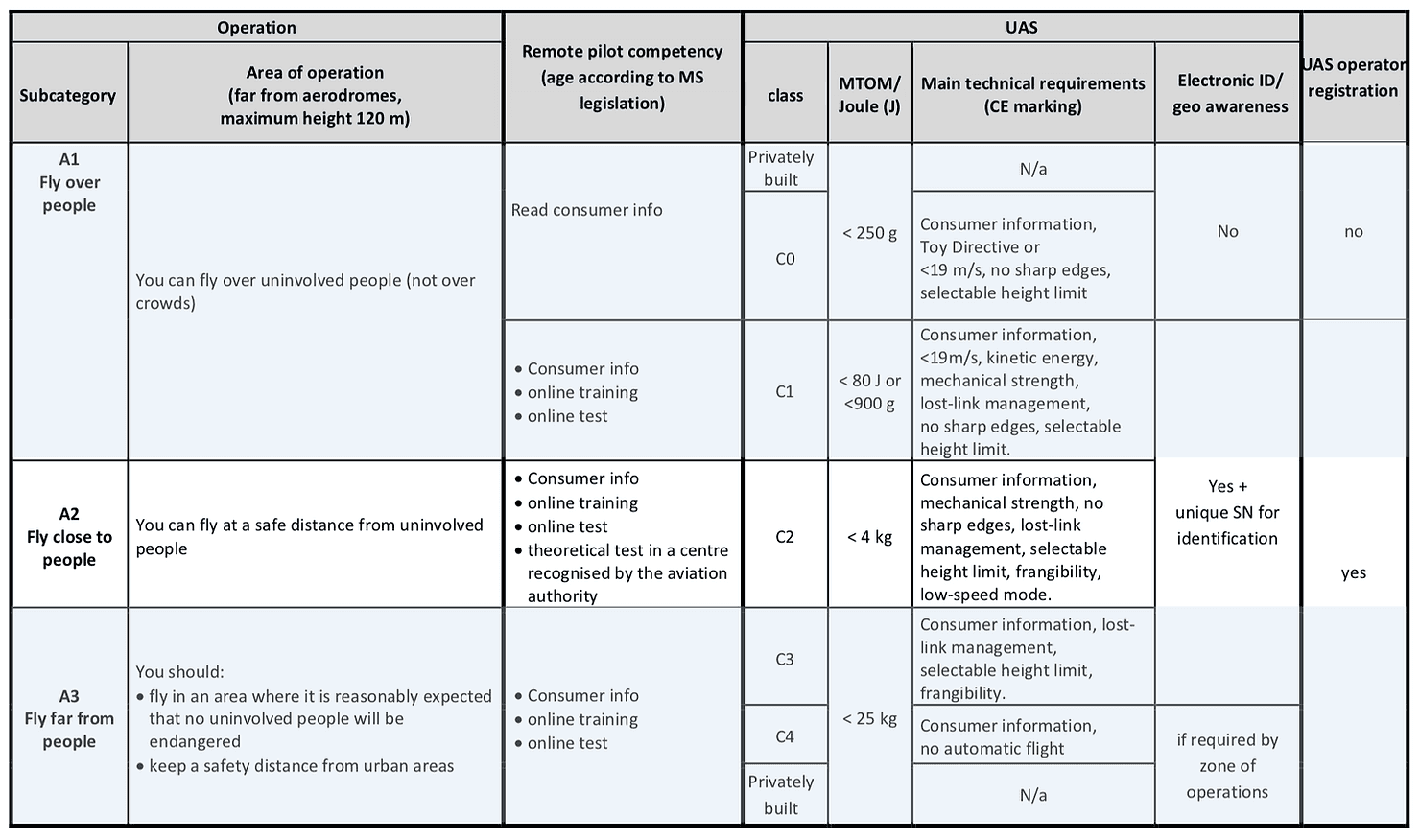
Então, o que podemos extrair desta tabela? Quando olhamos mais de perto, veremos que os seguintes tipos de operações são permitidos dentro da Categoria Aberta:
Voos sobre pessoas não envolvidas com drones mais leves que 900 gramas, por exemplo, voando seu DJI Mavic Air dentro de uma área residencial
Voos a uma distância segura (mais de 30 metros) de pessoas não envolvidas com drones mais leves que 4 kg, por exemplo, mapeando um canteiro de obras com um DJI Phantom 4 RTK
Voos a uma distância segura (mais de 150 metros) de áreas urbanas (como áreas residenciais, recreativas e industriais) com drones mais leves que 25 kg, por exemplo, realizando um voo de fiscalização costeira com um Matrice 300
Como podemos ver, isso oferece muito potencial para muitos tipos diferentes de operações. No entanto, as autoridades nacionais (de aviação) podem designar certas zonas como "Apenas Categoria Específica". Estas zonas, por exemplo áreas em torno de aeroportos ou heliportos, serão mostradas em um mapa do espaço aéreo - como aquele disponível em nosso AirHub Drone Operations Center. Isso pode limitar suas operações dentro da Categoria Aberta e obrigá-lo a operar na Categoria Específica.
Agora que sabemos quando uma operação ocorre dentro da Categoria Aberta, vamos analisar como você pode determinar os requisitos que precisará cumprir ao operar dentro dessa categoria.
Requisitos gerais
Operar seu drone dentro da Categoria Aberta significa que você deve obedecer a algumas regras gerais e deverá cumprir certos requisitos. E dependendo da subcategoria (A1 - A3) em que você opera, regras e requisitos adicionais se aplicarão (que explicaremos abaixo).
A primeira coisa que você deve fazer ao planejar operar seu drone na Categoria Aberta é registrar a si mesmo ou sua empresa no registro nacional. Isso é obrigatório para todos os drones que pesam mais de 250 gramas ou possuem uma câmera a bordo (a menos que seja um brinquedo).
Depois de se registrar, é hora de desenvolver procedimentos operacionais adaptados ao tipo de operação e ao risco envolvido. No mínimo, estes devem incluir:
Procedimentos sobre como operar o UAS de acordo com o manual do usuário fornecido pelo fabricante, incluindo quaisquer limitações aplicáveis;
Diretrizes para usar e apoiar eficazmente o uso eficiente do espectro de rádio, a fim de evitar interferências prejudiciais;
Diretrizes sobre como designar um piloto remoto para cada operação de UAS;
Procedimentos para garantir que os pilotos remotos e todo o pessoal envolvido em tarefas de suporte às operações estejam familiarizados com o manual do usuário fornecido pelo fabricante do UAS;
Requisitos de competência para o(s) piloto(s) remoto(s) e para o pessoal além do piloto remoto, uma descrição de cursos de treinamento prático no local;
Procedimentos sobre como verificar e atualizar informações sobre quaisquer zonas geográficas no sistema de conscientização geográfica quando aplicável de acordo com o local de operação pretendido; g) Procedimentos sobre como cumprir as limitações operacionais em zonas geográficas;
Procedimentos para garantir que o UAS esteja em condição de concluir o voo pretendido com segurança e, se aplicável, verificar se a identificação remota direta funciona corretamente;
Procedimentos para verificar se a massa do UAS não excede o MTOM definido pelo fabricante ou o limite de MTOM de sua classe - se o UAS estiver equipado com uma carga útil adicional; j) Procedimentos para garantir, no caso de uma operação de UAS na subcategoria A2 ou A3, que todas as pessoas envolvidas presentes na área da operação tenham sido informadas dos riscos e tenham concordado explicitamente em participar.
Procedimentos para observar o ambiente operacional, verificar a presença de obstáculos e a presença de quaisquer pessoas não envolvidas;
Procedimentos para verificar se o piloto remoto não está executando tarefas sob a influência de substâncias psicoativas ou álcool ou se estiver inapto para realizar suas tarefas devido a lesões, fadiga, medicação, doenças ou outras causas;
Procedimentos sobre como manter o drone em VLOS e realizar uma verificação visual minuciosa do espaço aéreo ao redor da aeronave não tripulada para evitar qualquer risco de colisão com qualquer aeronave tripulada;
Um procedimento sobre como interromper o voo se a operação representar um risco para outras aeronaves, pessoas, animais, ambiente ou propriedade; o) Se o piloto remoto for assistido por um observador visual, um procedimento para garantir comunicação clara e efetiva entre o piloto remoto e o observador visual.
Um procedimento para prevenir que o piloto remoto voe próximo ou dentro de áreas onde está sendo realizada uma operação de resposta a emergências, a menos que você tenha permissão para fazê-lo por parte dos serviços de resposta a emergências responsáveis.
Um procedimento para voar a uma altura superior a 120 metros ao operar próximo a um objeto (dentro de 50 metros) - até um máximo de 15 metros acima do objeto a pedido do administrador.
Quando olhamos para os procedimentos exigidos acima, podemos distinguir uma clara diferença entre operações comerciais - empresas com pessoal além do piloto remoto - e operações realizadas para fins recreativos. Para operações recreativas, operar de acordo com o manual do usuário do drone normalmente será suficiente, porém os operadores comerciais provavelmente desejarão estabelecer um Manual de Operações para sua operação.
Agora é hora de olhar mais de perto as regras e requisitos para as três subcategorias dentro da Categoria Aberta.
Operações dentro da subcategoria A1
Como podemos ver na tabela acima, você tem permissão para operar drones com um peso máximo de decolagem (#MTOW) inferior a 900 gramas nesta subcategoria. Estes drones normalmente têm uma marcação CE C0 ou C1. A diferença, no entanto, é que, para voar um drone mais pesado que 250 gramas nesta categoria (C1), você precisará completar um treinamento e teste online antes de ter permissão para operar.
E onde você tem permissão para sobrevoar intencionalmente pessoas não envolvidas com drones C0 mais leves que 250 gramas, isso não ocorre no caso de drones C1 entre 250 - 900 gramas. Com esses drones, deve haver uma expectativa razoável de que nenhuma pessoa não envolvida será sobrevoada. E no caso de sobrevoo inesperado de pessoas não envolvidas, você deve reduzir o máximo possível o tempo durante o qual o drone sobrevoa essas pessoas.
Operações dentro da subcategoria A2
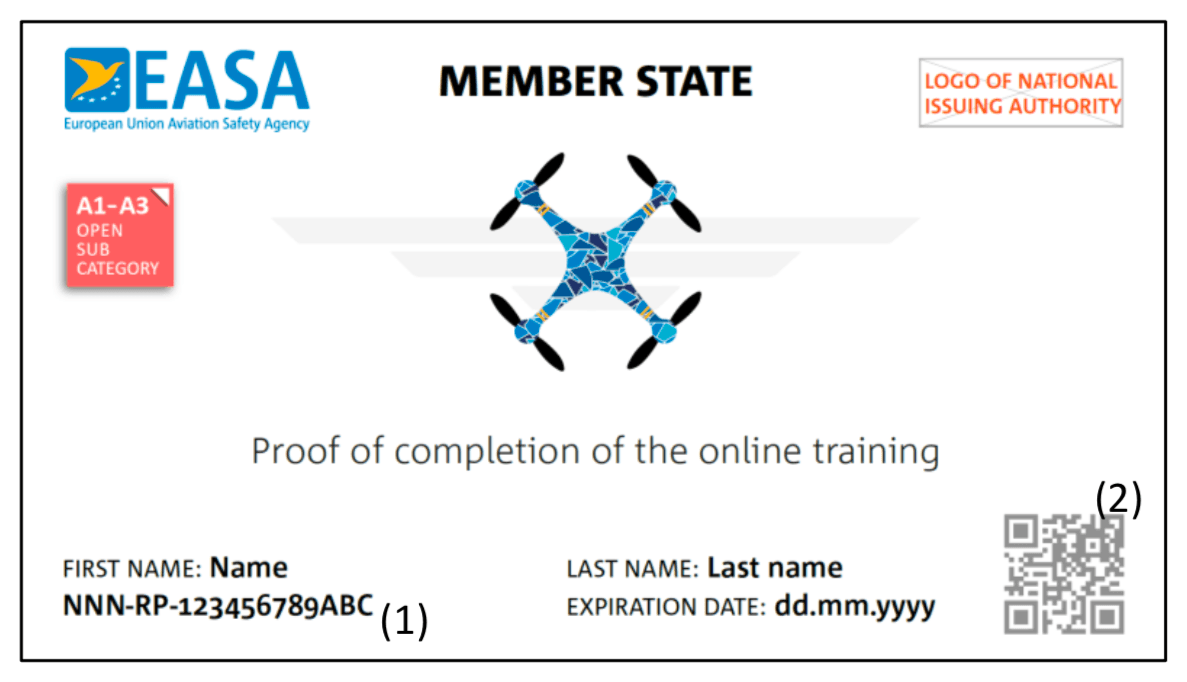
Na subcategoria A2, você tem permissão para operar drones até 4 kg, esses drones terão uma marcação CE C0, C1 ou C2 - os últimos são aqueles entre 900 gramas e 4 kg de MTOW. Ao voar um drone marcado C4, você terá que garantir que as operações do UAS ocorrem a uma distância horizontal segura de pelo menos 30 metros de pessoas não envolvidas. No entanto, há uma exceção a isso quando você opera com um modo de baixa velocidade ativado (máx 3 m/s). Nesse caso, a distância mínima é reduzida para 5 metros quando as condições meteorológicas, obstáculos na área e desempenho do drone permitem.
Assim como ao operar um drone C1 na subcategoria A1, você terá que completar um treinamento e teste online para operar drones C2 na categoria A2. No entanto, você também precisará concluir um treinamento prático e um teste teórico em uma instalação reconhecida (governamental).
Operações dentro da subcategoria A3
Novamente, olhando para a tabela acima, vemos que a subcategoria A3 é um pouco mais restritiva do que as outras subcategorias, mas permite que você opere drones muito mais pesados - até 25 kg. Esses drones serão marcados com uma marcação CE de C0 até C4, mas você também tem permissão para operar drones que tenham sido construídos privadamente (por exemplo, aeronaves modelo).
Os voos dentro dessa subcategoria devem ser conduzidos em uma área onde o piloto remoto razoavelmente espera que nenhuma pessoa não envolvida esteja em perigo dentro do alcance onde a aeronave não tripulada está voando durante todo o tempo da operação do UAS. Isso significa que você deve manter uma distância horizontal segura de pelo menos 150 metros de áreas residenciais, comerciais, industriais ou recreativas.
Cumprindo os requisitos
Agora que você sabe como avaliar se suas operações se enquadram na Categoria Aberta e sabe como determinar os requisitos e regras aplicáveis à sua operação, é hora de cumprir essas regras e requisitos. Então, como você pode fazer isso? É aqui que entramos no AirHub.
Como o AirHub pode ajudar
No AirHub, guiamos muitas organizações em diversos setores na configuração de uma operação de drones segura, eficiente e em conformidade. Contacte-nos para aproveitar a experiência e expertise dos nossos consultores e treinadores. Nossos consultores ajudarão você a configurar procedimentos específicos para sua operação. Nossos treinadores ajudarão sua equipe a obter certificação e os treinará na condução segura do seu tipo de operação. E com nossa plataforma de Gestão de Operações de Drones AirHub, você poderá planejar, executar e administrar suas operações de drones de forma eficiente.