Recursos

Recursos

Explore os nossos guias, notícias do setor e histórias de sucesso para otimizar as suas operações de drones.

Explore os nossos guias, notícias do setor e histórias de sucesso para otimizar as suas operações de drones.

Centro de ajuda mais recente

Centro de ajuda mais recente

Como criar uma missão de piloto

Planeie voos manuais de drones seguros e em conformidade.

Como: Adicionar Drones ao Seu Local de Trabalho

Adicionar drones à sua biblioteca é útil por várias razões. Isso lhe dará uma visão clara de quais drones estão presentes na organização, fornecerá clareza sobre os drones que precisam de manutenção e permitirá que você acompanhe onde cada drone voou, entre outros benefícios. Nesta página, você aprenderá como adicionar novos drones e como editar os existentes.

Como: Relatar um Incidente com Drones no AirHub

Reportar incidentes, acidentes e perigos é uma pedra angular de um Sistema de Gestão de Segurança (SMS) forte. Permite que a sua organização aprenda com os eventos, identifique tendências e implemente ações corretivas para prevenir ocorrências futuras. A apresentação de relatórios consistente e completa ajuda a melhorar os procedimentos operacionais, aumenta a segurança para a sua equipa e o público, e garante o cumprimento regulamentar. A AirHub oferece duas formas convenientes de relatar um incidente.

Como: Configurar e Gerir um Programa de Manutenção

A manutenção proativa é crucial para garantir a segurança, fiabilidade e longevidade da sua frota de drones. A funcionalidade de Manutenção da AirHub oferece um sistema abrangente para criar programas de manutenção programada, acompanhar o uso dos ativos em relação a intervalos estabelecidos e manter um histórico de serviço detalhado para cada ativo. Isso ajuda a transitar de reparações reativas para uma cultura de manutenção proativa, reduzindo o tempo de inatividade e assegurando a conformidade regulatória.

Como: Editar Programa de Manutenção

Com o tempo, pode ser necessário atualizar os seus programas de manutenção para refletir as alterações na sua frota ou nos procedimentos. Editar um programa permite-lhe modificar os seus detalhes, alterar as condições de acionamento ou, mais frequentemente, adicionar novos ativos a um cronograma de manutenção existente. Isto garante que o seu acompanhamento de manutenção permaneça preciso à medida que a sua frota cresce e evolui.

Como fazer: Manutenção de Arquivamento

Se um programa de manutenção já não for relevante para as suas operações, por exemplo, se tiver retirado todos os ativos a que o programa se aplica, pode arquivá-lo. Arquivar remove o programa da sua lista ativa, mantendo o seu painel de manutenção limpo e focado nos requisitos atuais. Todos os dados históricos associados ao programa são preservados.

Como: Ler os Avisos Meteorológicos

O tempo é um dos fatores mais importantes que influenciam a segurança e o sucesso de qualquer operação com drones. Uma verificação meteorológica completa antes do voo é essencial para garantir que o seu drone possa operar dentro dos seus limites operacionais, manter a estabilidade e cumprir as regulamentações de aviação. A ferramenta meteorológica da AirHub fornece previsões detalhadas e específicas para cada localização, ajudando-o a tomar decisões informadas sobre avançar ou não com a operação.

Como: Zonas de Voo

Saiba como criar e gerir zonas de voo no AirHub para definir áreas de voo seguras e conformes para as suas operações de drones.

Como: Gerir os Seus Drones

Adicionar drones à sua biblioteca é útil por várias razões. Isso lhe dará uma visão clara de quais drones estão presentes na organização, fornecerá clareza sobre os drones que precisam de manutenção e permitirá que você acompanhe onde cada drone voou, entre outros benefícios. Nesta página, você aprenderá como adicionar novos drones e como editar os existentes.

Notícias

Notícias

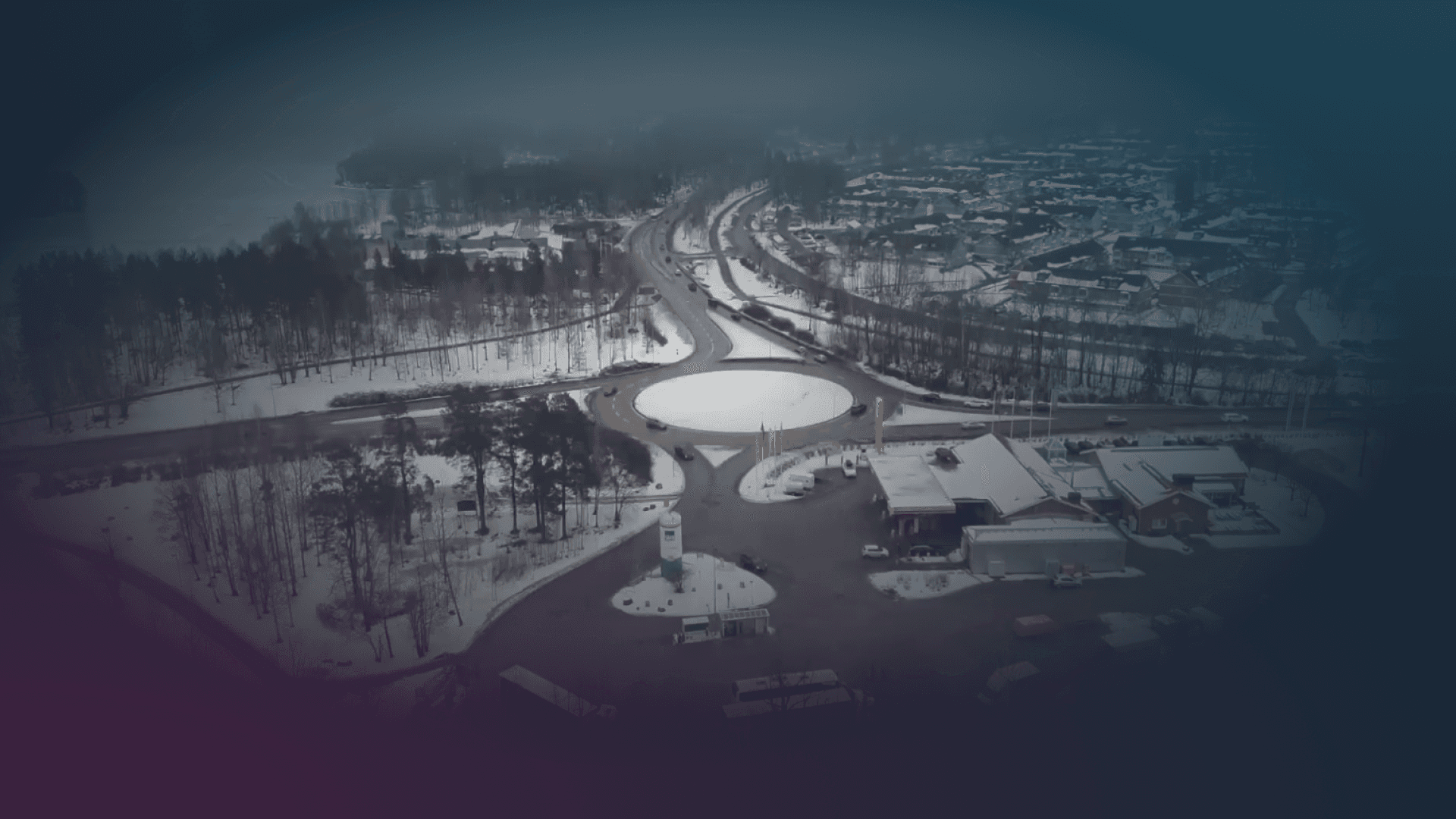
AirHub Knowledge Series: Understanding Drone Detection Systems:

As drones become more accessible and widely used, airspace users and asset owners increasingly need to understand what is flying around them. This has driven rapid growth in drone detection systems, often grouped under the broader term Counter-UAS. Yet many discussions blur important distinctions: detection versus mitigation, detection versus classification, and tactical versus strategic use.

This blog unpacks the main types of drone detection systems, explains where each works best, and highlights their strengths and limitations.

Detection Versus Mitigation: A Critical Distinction

Before diving into technologies, it’s important to separate two fundamentally different capabilities.

Drone detection systems aim to identify that a drone is present, determine where it is, and ideally understand what type of drone it is. These systems provide awareness and support decision-making.

Drone mitigation systems actively interfere with a drone, for example through jamming, takeover, or kinetic means. These actions are typically heavily restricted or reserved for state authorities due to safety, legal, and liability concerns.

Most organisations, including critical infrastructure operators and public agencies, are focused first and foremost on detection and situational awareness. Without reliable detection and classification, mitigation is either impossible or unsafe.

Detection Versus Classification

Detection alone answers the question: is there something flying here?

Classification answers a more nuanced question: what is it?

A robust system ideally supports both:

• Detection identifies an object or signal that could be a drone
• Classification determines whether it is a drone, which type, and whether it is likely compliant or non-cooperative

Not all technologies support both equally, which is one of the key trade-offs discussed below.

Radar-Based Drone Detection

Radar systems detect objects by emitting radio waves and analysing reflections. They are widely used in traditional aviation and have been adapted for low-altitude drone detection.

Radar is particularly effective for:

• Wide-area surveillance
• Detecting drones regardless of RF emissions
• Operations in darkness or poor visibility

However, radar systems face challenges at low altitude. Small drones have a limited radar cross-section, making them harder to distinguish from birds, vehicles, or clutter. As a result, radar often provides strong detection capability, but limited classification without support from other sensors.

Radar is most suitable for:

• Airports and large industrial sites
• Border and coastal surveillance
• Areas where long-range early warning is required

RF-Based Drone Detection

RF detection systems monitor the radio spectrum for signals between drones and their controllers. When a drone communicates using known protocols, RF sensors can often identify:

• The presence of a drone
• Its manufacturer or model family
• Sometimes the position of the drone and pilot

RF detection excels at classification for commercially available drones using standard control links. It is passive, meaning it does not emit signals itself, which is advantageous in sensitive environments.

Its limitations become apparent when:

• Drones fly autonomously without an active control link
• Encrypted or non-standard frequencies are used
• Signal reflections or urban interference reduce accuracy

RF systems are well suited for:

• Urban environments
• Security perimeters
• Monitoring compliance around restricted zones

Electro-Optical and Infrared Systems

Visual detection uses cameras, often combined with AI-based image recognition, to spot drones directly.

Electro-optical cameras operate in visible light, while infrared systems detect heat signatures. Together, they can:

• Visually confirm the presence of a drone
• Support classification and tracking
• Provide evidential imagery

These systems perform best when they are cuing systems, meaning they are directed to a specific area by another sensor such as radar or RF. On their own, wide-area scanning is difficult and computationally expensive.

Their main constraints are:

• Weather and lighting conditions
• Line-of-sight requirements
• Limited range compared to radar

Visual systems are most effective for:

• Perimeter security
• Critical infrastructure protection
• Situational confirmation after initial detection

Acoustic Drone Detection

Acoustic systems identify drones based on their sound signature. They use microphone arrays and pattern recognition to detect and sometimes classify drones.

Acoustic detection can be valuable in:

• Very low-altitude environments
• Areas with restricted RF emissions
• Situations where visual line of sight is obstructed

However, acoustic systems are highly sensitive to ambient noise, wind, and terrain. Their effective range is relatively short, and false positives can occur in noisy environments.

As a result, acoustic detection is typically used as a supplementary sensor, rather than a primary detection method.

Why Multi-Sensor Fusion Matters

No single detection technology is sufficient on its own. Each has blind spots, and each performs differently depending on environment, weather, and threat profile.

Modern drone detection architectures increasingly rely on sensor fusion, combining:

• Radar for wide-area detection
• RF for identification and classification
• Visual and infrared sensors for confirmation and tracking
• Acoustic sensors for close-range awareness

By correlating inputs, systems reduce false alarms and improve confidence. This layered approach is particularly important in complex environments such as ports, industrial sites, and urban areas.

Detection in the Context of Airspace Awareness

Drone detection systems do not operate in isolation. In many operational contexts, especially public safety and critical infrastructure, detection must be integrated with:

• Drone enablement systems for authorised operations
• UTM or U-space services providing cooperative traffic information
• Procedures for escalation, coordination, and response

Detection systems primarily address non-cooperative traffic: drones that are not visible in UTM systems or are operating outside authorisation. When combined with cooperative traffic data, organisations can build a far more complete picture of the lower airspace.

How AirHub Fits Into This Picture

At AirHub, we see drone detection as one element of a broader airspace awareness and governance challenge.

Through our Drone Operations Platform, we integrate data from UTM and U-space services and support integrations with drone detection systems. This allows operators and authorities to distinguish between authorised drone traffic and unknown or potentially non-compliant activity.

From a consultancy perspective, we support organisations in:

• Selecting appropriate detection technologies for their operational context
• Defining procedures for detection, escalation, and coordination
• Integrating detection capabilities into regulatory frameworks, including SORA and operational authorisations
• Aligning detection strategies with legal constraints on mitigation

Rather than treating detection as a standalone technical problem, we help organisations embed it into safe, compliant, and scalable operational concepts.

Closing Thoughts

Drone detection is not about choosing the “best” sensor. It is about understanding what you need to detect, where, and why. Radar, RF, visual, and acoustic systems all have a role to play, but only when deployed with a clear operational concept and regulatory awareness.

As drone traffic continues to increase, organisations that combine detection, cooperative traffic services, and strong operational governance will be best positioned to manage the lower airspace safely and effectively.

If you’re exploring how drone detection fits into your broader drone or airspace strategy, our team at AirHub is happy to support both technically and operationally.

AirHub Knowledge Series: Remote ID in 2026 - EASA vs UK

s unmanned aircraft systems (UAS) become more common and operations more complex, Remote Identification (Remote ID) has become a cornerstone of modern drone regulation. It is designed to improve airspace safety, accountability and oversight, enabling enforcement authorities to know who is flying what and where, in near-real time.

While the EASA framework has required Remote ID for most drones for some time, the UK’s post-Brexit regulatory regime introduced significant changes from 1 January 2026, including phased Remote ID requirements embedded in a new class-marking system. This article explains the regulatory differences and practical implications between the EU and UK approaches.

What is Remote ID?

Remote ID is essentially a digital aircraft “license plate”. It requires a drone in flight to broadcast identification and location data - typically via a wireless link - so that enforcement authorities (and in some regimes the public) can identify and monitor flights. This information usually includes:

  • Operator ID and unique aircraft serial number

  • Aircraft position and altitude

  • Aircraft direction/ground speed

  • Operator or take-off location

  • Emergency status indicators 

Remote ID is not new; it reflects a global trend in modernising UAS oversight, similar to the FAAs Remote ID regime in the United States. 

EASA 2021/947: Remote ID in the European Union

Under the EASA framework created by Regulation (EU) 2019/947, and its related delegated rules:

Remote ID requirements
  • Remote ID is required for all drones operating in the Specific category and for drones with CE class marks (C1, C2, C3, C5, C6) in the Open category.

  • Drones with class mark C0 (under 250 g, low risk) are exempt from Remote ID obligations.

  • Certain model aircraft (C4) and special tethered systems may also be exempt under strict conditions.

  • The architecture is typically Direct Remote ID, meaning devices broadcast directly locally without depending on an internet connection.

  • Compliance has been mandatory in many EASA member states since January 2024, when EASA’s rules became fully applicable. 

How EASA Remote ID works
  • Drone manufacturers or module makers provide compliant Remote ID systems.

  • Operators upload their operator registration number into the drone’s Remote ID system.

  • During flight, data is broadcast continuously and can be received by authorised receivers in the vicinity.

  • The system supports operational safety and enforcement - notably within U-Space but independent of network connectivity. 

In practice under EASA, Remote ID is closely tied to the class-marking regime introduced across the EU. Most modern drones on the market already comply with these standards, either built-in or via approved modules.

UK Remote ID: New Rules from 1 January 2026

Post-Brexit, the UK Civil Aviation Authority (CAA) overhauled its UAS regulatory framework. The most significant structural change was the introduction of UK class marks (UK0–UK6) for drones sold in the UK from 1 January 2026 onwards - similar in logic to EU class marks but tailored to UK policy. 

Remote ID implementation timeline

The UK Remote ID regime is phased based on drone class:

Drone Type / Class

Remote ID Mandatory From

UK1, UK2, UK3, UK5, UK6

1 January 2026

UK0 ≥100g with camera, UK4 (e.g. model aircraft), legacy non-class marked drones ≥100g with camera

1 January 2028

All other drone/model operations (where applicable)

1 January 2028

This phased approach balances safety with a transition period allowing operators to retrofit or prepare legacy platforms. 

Operational requirements in the UK
  • Operators must enable Remote ID whenever flying after the applicable date.

  • UK class-marked drones must broadcast Remote ID directly (usually via built-in functionality).

  • Each operator is issued a Remote ID number when registering with the CAA, which must be entered into the drone’s system.

  • Remote ID here functions as a direct broadcast and is primarily intended for enforcement bodies to ensure legal operations, rather than widespread public consumption. 

Key Differences: EASA vs UK

Below are the major regulatory differences between the EU and the UK:

1. Mandatory timelines
  • EASA (EU): Remote ID has been mandatory for most drones since January 2024 for C-class marked systems.

  • UK: Remote ID became mandatory from 1 January 2026 for most class-marked drones, with full coverage by 2028 for legacy and certain other drones. 

2. Scope of applicability
  • EASA: Applies broadly to drones in the Open and Specific categories with class marks, with exemptions for C0 and certain exempt systems.

  • UK: Applies first to UK class-marked drones (UK1–UK3, UK5, UK6) and later to other classes/legacy drones after transition. 

3. Relationship to class markings
  • EASA: Remote ID is tied directly into the EU’s CE C-class marking regime under 2019/947.

  • UK: Remote ID is embedded within the UK’s bespoke UK0–UK6 system. EU C-class drones are accepted in the UK until end-2027, but UK regulation takes precedence post-transition. 

4. Enforcement and public access
  • EASA: Due to harmonisation across member states, Remote ID data supports both airspace safety and, in some contexts, public awareness via U-Space services.

  • UK: Remote ID is primarily aimed at enforcement safety; personal identifying data is restricted, and the system is designed for authorised bodies. 

Practical Takeaways for Operators

For EU flights:

  • Ensure your drone’s Remote ID is compliant with EASA’s Class mark requirements and Direct Remote ID is active.

  • Upload your operator registration number and monitor firmware updates for Remote ID compliance.

For UK flights:

  • Confirm your drone’s UK class mark and the applicable Remote ID deadline.

  • Make sure Remote ID is enabled before flight and that your operator’s Remote ID number is correctly configured in your equipment.

  • Prepare for the 2028 extension if you operate legacy or non-class-marked drones.

Conclusion

Remote ID is an essential part of modern drone regulation - enabling safer skies, accountability, and preparedness for more advanced operations. The EASA and UK frameworks share a common goal but differ in implementation timelines, class-mark relationships, and enforcement approaches.

Understanding these differences is vital for any operator intending to fly in both EU and UK airspace under the respective legal regimes.

C-UAS Detection
Série de Conhecimento AirHub: Deteção C-UAS como Parte de um Quadro Completo do Espaço Aéreo

À medida que as operações com drones se expandem, o desafio já não é voar em segurança de forma isolada. O verdadeiro desafio é compreender tudo o que mais está a acontecer no espaço aéreo ao mesmo tempo. As agências de segurança pública, operadores de infraestrutura crítica, aeroportos, portos e organizações de segurança precisam cada vez mais de uma visão única e coerente do espaço aéreo, em vez de dados fragmentados de sistemas desconectados.

Sistemas de deteção contra UAS (C-UAS) desempenham um papel crucial nesse panorama. Mas o seu verdadeiro valor só aparece quando são entendidos não como ferramentas de segurança independentes, mas como parte de um ecossistema mais amplo de consciência do espaço aéreo que inclui UTM, ATM, conceitos de deteção e desvio sob SORA, e conspicuidade eletrónica.

De Deteção de Ameaças a Consciência do Espaço Aéreo

Tradicionalmente, os sistemas de C-UAS são implementados com um objetivo restrito: detetar drones não autorizados ou hostis. Radar, sensores de RF, recetores de ID remoto, sensores acústicos e câmaras eletro-ópticas são usados para identificar e rastrear objetos aéreos desconhecidos.

Por conta própria, esses sistemas respondem apenas a uma pergunta:

“Há algo aqui que não deveria estar?”

Em operações reais, no entanto, essa pergunta raramente é suficiente. Os operadores também precisam saber:

  • O drone detetado é cooperativo ou não cooperativo?

  • Faz parte de uma missão UAS autorizada?

  • Há aviação tripulada nas proximidades?

  • O espaço aéreo está temporariamente restrito?

  • Este objeto é um risco de segurança, uma ameaça à segurança, ou simplesmente tráfego normal?

É aqui que a deteção C-UAS deve ser ligada ao cenário mais amplo de informações do espaço aéreo.

O Papel do UTM: Saber o Que Deveria Estar Lá

Os sistemas de Gestão de Tráfego Não Tripulado (UTM) fornecem insights sobre o tráfego de drones autorizados e cooperativos. Planos de voo, volumes operacionais, desconflito estratégico e estado operacional são geridos digitalmente e partilhados com partes interessadas relevantes.

Quando as deteções de C-UAS são correlacionadas com dados de UTM, uma distinção imediata torna-se possível:

  • Detetado + conhecido no UTM → operação cooperativa, autorizada

  • Detetado + não conhecido no UTM → objeto desconhecido ou potencialmente não autorizado

Essa correlação reduz significativamente falsos alarmes e permite que os operadores concentrem sua atenção onde é necessário. Sem o contexto do UTM, toda a deteção parece suspeita. Com o contexto do UTM, as deteções ganham significado.

Em outras palavras, o UTM fornece a camada de intenção, enquanto o C-UAS fornece a camada de observação.

Integração com ATM: A Perspectiva da Aviação Tripulada

Qualquer imagem realista do espaço aéreo deve também incluir a aviação tripulada. Helicópteros, aviação geral, serviços de emergência e tráfego comercial operam todos no mesmo espaço aéreo físico que os drones, especialmente a baixa altitude.

Os sistemas de Gestão de Tráfego Aéreo (ATM) já gerem esse tráfego usando radar, ADS-B, Modo S e controle procedimental. Embora os sistemas ATM não sejam projetados para drones, seus dados são essenciais para:

  • compreender o risco de colisão,

  • coordenar respostas de emergência,

  • e prevenir a interpretação errada de dados de sensores.

Quando os dados do ATM são fundidos com as entradas de C-UAS e UTM, os operadores podem ver tanto drones cooperativos quanto aeronaves tripuladas em uma única imagem operacional. Isto é particularmente relevante para organizações de segurança pública e segurança operando perto de heliportos, hospitais, portos e corredores de infraestrutura.

Detetar e Evitar na Prática (Perspectiva SORA)

De acordo com SORA, Detetar e Evitar (DAA) não é uma única tecnologia, mas um requisito funcional. Os operadores devem demonstrar que podem detetar utilizadores do espaço aéreo em conflito e tomar ações apropriadas, dependendo do nível de risco avaliado.

Os sistemas de deteção C-UAS são cada vez mais relevantes nesse contexto, especialmente para:

  • tráfego não cooperativo,

  • drones sem ID remoto,

  • ou operações em ambientes complexos onde nem todos os usuários do espaço aéreo são digitalmente visíveis.

Quando integrados num sistema operacional, os sensores C-UAS podem contribuir para a função DAA por:

  • proporcionar deteção precoce de tráfego desconhecido,

  • apoiar a tomada de decisões táticas,

  • e acionar medidas de mitigação definidas no ConOps.

No entanto, a DAA só é credível se as deteções forem contextualizadas. Acertos de sensores brutos sem contexto de espaço aéreo não atendem à intenção do SORA. A integração com UTM, ATM e conspicuidade eletrónica é, portanto, essencial.

Conspicuidade Eletrónica: Tornando o Tráfego Cooperativo Visível

Tecnologias de conspicuidade eletrónica, como soluções de ID Remoto e ADS-B para drones, são projetadas para tornar os utilizadores cooperativos do espaço aéreo visíveis digitalmente. Elas funcionam como uma ponte entre UAS, UTM, ATM e sistemas de deteção em terra.

De uma perspectiva de consciência do espaço aéreo, a conspicuidade eletrónica permite:

  • classificação mais rápida de objetos detetados,

  • redução da ambiguidade entre tráfego cooperativo e não cooperativo,

  • e melhoria da interoperabilidade entre partes interessadas civis e de segurança.

Sistemas C-UAS que podem ingerir dados de conspicuidade eletrónica tornam-se significativamente mais poderosos. Eles não detetam apenas presenças; eles ajudam a explicar identidade, intenção e conformidade.

Um Quadro Operacional, Não Sistemas Separados

A principal lição é que nenhum sistema sozinho pode fornecer uma imagem completa do espaço aéreo:

  • C-UAS deteta o que está fisicamente presente, incluindo objetos não cooperativos.

  • UTM explica quais operações de drones são autorizadas e planeadas.

  • ATM fornece conscientização sobre a aviação tripulada.

  • Detetar e Evitar (SORA) define como essas informações devem ser usadas operacionalmente.

  • Conspicuidade Eletrónica conecta utilizadores cooperativos do espaço aéreo ao ecossistema digital.

Apenas quando esses elementos são combinados é que a verdadeira consciência situacional emerge.

Para operadores, autoridades e organizações de segurança, o objetivo não deve ser implantar mais sensores, mas sim conectar as camadas de informação corretas em uma visão operacional única. É aí que as decisões de segurança se tornam mais rápidas, as respostas de segurança mais proporcionais, e a integração do espaço aéreo verdadeiramente escalável.

Pensamento Final

A deteção C-UAS é frequentemente discutida em termos de mitigação de ameaças. Na prática, o seu maior valor reside noutro lugar: como um bloco de construção crítico para compreender o espaço aéreo como um todo. Quando deteção, gestão de tráfego e tomada de decisões operacionais se reúnem, o espaço aéreo torna-se não apenas mais seguro, mas inteligível.

AirHub Knowledge Series: Understanding Drone Detection Systems:

As drones become more accessible and widely used, airspace users and asset owners increasingly need to understand what is flying around them. This has driven rapid growth in drone detection systems, often grouped under the broader term Counter-UAS. Yet many discussions blur important distinctions: detection versus mitigation, detection versus classification, and tactical versus strategic use.

This blog unpacks the main types of drone detection systems, explains where each works best, and highlights their strengths and limitations.

Detection Versus Mitigation: A Critical Distinction

Before diving into technologies, it’s important to separate two fundamentally different capabilities.

Drone detection systems aim to identify that a drone is present, determine where it is, and ideally understand what type of drone it is. These systems provide awareness and support decision-making.

Drone mitigation systems actively interfere with a drone, for example through jamming, takeover, or kinetic means. These actions are typically heavily restricted or reserved for state authorities due to safety, legal, and liability concerns.

Most organisations, including critical infrastructure operators and public agencies, are focused first and foremost on detection and situational awareness. Without reliable detection and classification, mitigation is either impossible or unsafe.

Detection Versus Classification

Detection alone answers the question: is there something flying here?

Classification answers a more nuanced question: what is it?

A robust system ideally supports both:

• Detection identifies an object or signal that could be a drone
• Classification determines whether it is a drone, which type, and whether it is likely compliant or non-cooperative

Not all technologies support both equally, which is one of the key trade-offs discussed below.

Radar-Based Drone Detection

Radar systems detect objects by emitting radio waves and analysing reflections. They are widely used in traditional aviation and have been adapted for low-altitude drone detection.

Radar is particularly effective for:

• Wide-area surveillance
• Detecting drones regardless of RF emissions
• Operations in darkness or poor visibility

However, radar systems face challenges at low altitude. Small drones have a limited radar cross-section, making them harder to distinguish from birds, vehicles, or clutter. As a result, radar often provides strong detection capability, but limited classification without support from other sensors.

Radar is most suitable for:

• Airports and large industrial sites
• Border and coastal surveillance
• Areas where long-range early warning is required

RF-Based Drone Detection

RF detection systems monitor the radio spectrum for signals between drones and their controllers. When a drone communicates using known protocols, RF sensors can often identify:

• The presence of a drone
• Its manufacturer or model family
• Sometimes the position of the drone and pilot

RF detection excels at classification for commercially available drones using standard control links. It is passive, meaning it does not emit signals itself, which is advantageous in sensitive environments.

Its limitations become apparent when:

• Drones fly autonomously without an active control link
• Encrypted or non-standard frequencies are used
• Signal reflections or urban interference reduce accuracy

RF systems are well suited for:

• Urban environments
• Security perimeters
• Monitoring compliance around restricted zones

Electro-Optical and Infrared Systems

Visual detection uses cameras, often combined with AI-based image recognition, to spot drones directly.

Electro-optical cameras operate in visible light, while infrared systems detect heat signatures. Together, they can:

• Visually confirm the presence of a drone
• Support classification and tracking
• Provide evidential imagery

These systems perform best when they are cuing systems, meaning they are directed to a specific area by another sensor such as radar or RF. On their own, wide-area scanning is difficult and computationally expensive.

Their main constraints are:

• Weather and lighting conditions
• Line-of-sight requirements
• Limited range compared to radar

Visual systems are most effective for:

• Perimeter security
• Critical infrastructure protection
• Situational confirmation after initial detection

Acoustic Drone Detection

Acoustic systems identify drones based on their sound signature. They use microphone arrays and pattern recognition to detect and sometimes classify drones.

Acoustic detection can be valuable in:

• Very low-altitude environments
• Areas with restricted RF emissions
• Situations where visual line of sight is obstructed

However, acoustic systems are highly sensitive to ambient noise, wind, and terrain. Their effective range is relatively short, and false positives can occur in noisy environments.

As a result, acoustic detection is typically used as a supplementary sensor, rather than a primary detection method.

Why Multi-Sensor Fusion Matters

No single detection technology is sufficient on its own. Each has blind spots, and each performs differently depending on environment, weather, and threat profile.

Modern drone detection architectures increasingly rely on sensor fusion, combining:

• Radar for wide-area detection
• RF for identification and classification
• Visual and infrared sensors for confirmation and tracking
• Acoustic sensors for close-range awareness

By correlating inputs, systems reduce false alarms and improve confidence. This layered approach is particularly important in complex environments such as ports, industrial sites, and urban areas.

Detection in the Context of Airspace Awareness

Drone detection systems do not operate in isolation. In many operational contexts, especially public safety and critical infrastructure, detection must be integrated with:

• Drone enablement systems for authorised operations
• UTM or U-space services providing cooperative traffic information
• Procedures for escalation, coordination, and response

Detection systems primarily address non-cooperative traffic: drones that are not visible in UTM systems or are operating outside authorisation. When combined with cooperative traffic data, organisations can build a far more complete picture of the lower airspace.

How AirHub Fits Into This Picture

At AirHub, we see drone detection as one element of a broader airspace awareness and governance challenge.

Through our Drone Operations Platform, we integrate data from UTM and U-space services and support integrations with drone detection systems. This allows operators and authorities to distinguish between authorised drone traffic and unknown or potentially non-compliant activity.

From a consultancy perspective, we support organisations in:

• Selecting appropriate detection technologies for their operational context
• Defining procedures for detection, escalation, and coordination
• Integrating detection capabilities into regulatory frameworks, including SORA and operational authorisations
• Aligning detection strategies with legal constraints on mitigation

Rather than treating detection as a standalone technical problem, we help organisations embed it into safe, compliant, and scalable operational concepts.

Closing Thoughts

Drone detection is not about choosing the “best” sensor. It is about understanding what you need to detect, where, and why. Radar, RF, visual, and acoustic systems all have a role to play, but only when deployed with a clear operational concept and regulatory awareness.

As drone traffic continues to increase, organisations that combine detection, cooperative traffic services, and strong operational governance will be best positioned to manage the lower airspace safely and effectively.

If you’re exploring how drone detection fits into your broader drone or airspace strategy, our team at AirHub is happy to support both technically and operationally.

AirHub Knowledge Series: Remote ID in 2026 - EASA vs UK

s unmanned aircraft systems (UAS) become more common and operations more complex, Remote Identification (Remote ID) has become a cornerstone of modern drone regulation. It is designed to improve airspace safety, accountability and oversight, enabling enforcement authorities to know who is flying what and where, in near-real time.

While the EASA framework has required Remote ID for most drones for some time, the UK’s post-Brexit regulatory regime introduced significant changes from 1 January 2026, including phased Remote ID requirements embedded in a new class-marking system. This article explains the regulatory differences and practical implications between the EU and UK approaches.

What is Remote ID?

Remote ID is essentially a digital aircraft “license plate”. It requires a drone in flight to broadcast identification and location data - typically via a wireless link - so that enforcement authorities (and in some regimes the public) can identify and monitor flights. This information usually includes:

  • Operator ID and unique aircraft serial number

  • Aircraft position and altitude

  • Aircraft direction/ground speed

  • Operator or take-off location

  • Emergency status indicators 

Remote ID is not new; it reflects a global trend in modernising UAS oversight, similar to the FAAs Remote ID regime in the United States. 

EASA 2021/947: Remote ID in the European Union

Under the EASA framework created by Regulation (EU) 2019/947, and its related delegated rules:

Remote ID requirements
  • Remote ID is required for all drones operating in the Specific category and for drones with CE class marks (C1, C2, C3, C5, C6) in the Open category.

  • Drones with class mark C0 (under 250 g, low risk) are exempt from Remote ID obligations.

  • Certain model aircraft (C4) and special tethered systems may also be exempt under strict conditions.

  • The architecture is typically Direct Remote ID, meaning devices broadcast directly locally without depending on an internet connection.

  • Compliance has been mandatory in many EASA member states since January 2024, when EASA’s rules became fully applicable. 

How EASA Remote ID works
  • Drone manufacturers or module makers provide compliant Remote ID systems.

  • Operators upload their operator registration number into the drone’s Remote ID system.

  • During flight, data is broadcast continuously and can be received by authorised receivers in the vicinity.

  • The system supports operational safety and enforcement - notably within U-Space but independent of network connectivity. 

In practice under EASA, Remote ID is closely tied to the class-marking regime introduced across the EU. Most modern drones on the market already comply with these standards, either built-in or via approved modules.

UK Remote ID: New Rules from 1 January 2026

Post-Brexit, the UK Civil Aviation Authority (CAA) overhauled its UAS regulatory framework. The most significant structural change was the introduction of UK class marks (UK0–UK6) for drones sold in the UK from 1 January 2026 onwards - similar in logic to EU class marks but tailored to UK policy. 

Remote ID implementation timeline

The UK Remote ID regime is phased based on drone class:

Drone Type / Class

Remote ID Mandatory From

UK1, UK2, UK3, UK5, UK6

1 January 2026

UK0 ≥100g with camera, UK4 (e.g. model aircraft), legacy non-class marked drones ≥100g with camera

1 January 2028

All other drone/model operations (where applicable)

1 January 2028

This phased approach balances safety with a transition period allowing operators to retrofit or prepare legacy platforms. 

Operational requirements in the UK
  • Operators must enable Remote ID whenever flying after the applicable date.

  • UK class-marked drones must broadcast Remote ID directly (usually via built-in functionality).

  • Each operator is issued a Remote ID number when registering with the CAA, which must be entered into the drone’s system.

  • Remote ID here functions as a direct broadcast and is primarily intended for enforcement bodies to ensure legal operations, rather than widespread public consumption. 

Key Differences: EASA vs UK

Below are the major regulatory differences between the EU and the UK:

1. Mandatory timelines
  • EASA (EU): Remote ID has been mandatory for most drones since January 2024 for C-class marked systems.

  • UK: Remote ID became mandatory from 1 January 2026 for most class-marked drones, with full coverage by 2028 for legacy and certain other drones. 

2. Scope of applicability
  • EASA: Applies broadly to drones in the Open and Specific categories with class marks, with exemptions for C0 and certain exempt systems.

  • UK: Applies first to UK class-marked drones (UK1–UK3, UK5, UK6) and later to other classes/legacy drones after transition. 

3. Relationship to class markings
  • EASA: Remote ID is tied directly into the EU’s CE C-class marking regime under 2019/947.

  • UK: Remote ID is embedded within the UK’s bespoke UK0–UK6 system. EU C-class drones are accepted in the UK until end-2027, but UK regulation takes precedence post-transition. 

4. Enforcement and public access
  • EASA: Due to harmonisation across member states, Remote ID data supports both airspace safety and, in some contexts, public awareness via U-Space services.

  • UK: Remote ID is primarily aimed at enforcement safety; personal identifying data is restricted, and the system is designed for authorised bodies. 

Practical Takeaways for Operators

For EU flights:

  • Ensure your drone’s Remote ID is compliant with EASA’s Class mark requirements and Direct Remote ID is active.

  • Upload your operator registration number and monitor firmware updates for Remote ID compliance.

For UK flights:

  • Confirm your drone’s UK class mark and the applicable Remote ID deadline.

  • Make sure Remote ID is enabled before flight and that your operator’s Remote ID number is correctly configured in your equipment.

  • Prepare for the 2028 extension if you operate legacy or non-class-marked drones.

Conclusion

Remote ID is an essential part of modern drone regulation - enabling safer skies, accountability, and preparedness for more advanced operations. The EASA and UK frameworks share a common goal but differ in implementation timelines, class-mark relationships, and enforcement approaches.

Understanding these differences is vital for any operator intending to fly in both EU and UK airspace under the respective legal regimes.

AirHub Knowledge Series: Understanding Drone Detection Systems:

As drones become more accessible and widely used, airspace users and asset owners increasingly need to understand what is flying around them. This has driven rapid growth in drone detection systems, often grouped under the broader term Counter-UAS. Yet many discussions blur important distinctions: detection versus mitigation, detection versus classification, and tactical versus strategic use.

This blog unpacks the main types of drone detection systems, explains where each works best, and highlights their strengths and limitations.

Detection Versus Mitigation: A Critical Distinction

Before diving into technologies, it’s important to separate two fundamentally different capabilities.

Drone detection systems aim to identify that a drone is present, determine where it is, and ideally understand what type of drone it is. These systems provide awareness and support decision-making.

Drone mitigation systems actively interfere with a drone, for example through jamming, takeover, or kinetic means. These actions are typically heavily restricted or reserved for state authorities due to safety, legal, and liability concerns.

Most organisations, including critical infrastructure operators and public agencies, are focused first and foremost on detection and situational awareness. Without reliable detection and classification, mitigation is either impossible or unsafe.

Detection Versus Classification

Detection alone answers the question: is there something flying here?

Classification answers a more nuanced question: what is it?

A robust system ideally supports both:

• Detection identifies an object or signal that could be a drone
• Classification determines whether it is a drone, which type, and whether it is likely compliant or non-cooperative

Not all technologies support both equally, which is one of the key trade-offs discussed below.

Radar-Based Drone Detection

Radar systems detect objects by emitting radio waves and analysing reflections. They are widely used in traditional aviation and have been adapted for low-altitude drone detection.

Radar is particularly effective for:

• Wide-area surveillance
• Detecting drones regardless of RF emissions
• Operations in darkness or poor visibility

However, radar systems face challenges at low altitude. Small drones have a limited radar cross-section, making them harder to distinguish from birds, vehicles, or clutter. As a result, radar often provides strong detection capability, but limited classification without support from other sensors.

Radar is most suitable for:

• Airports and large industrial sites
• Border and coastal surveillance
• Areas where long-range early warning is required

RF-Based Drone Detection

RF detection systems monitor the radio spectrum for signals between drones and their controllers. When a drone communicates using known protocols, RF sensors can often identify:

• The presence of a drone
• Its manufacturer or model family
• Sometimes the position of the drone and pilot

RF detection excels at classification for commercially available drones using standard control links. It is passive, meaning it does not emit signals itself, which is advantageous in sensitive environments.

Its limitations become apparent when:

• Drones fly autonomously without an active control link
• Encrypted or non-standard frequencies are used
• Signal reflections or urban interference reduce accuracy

RF systems are well suited for:

• Urban environments
• Security perimeters
• Monitoring compliance around restricted zones

Electro-Optical and Infrared Systems

Visual detection uses cameras, often combined with AI-based image recognition, to spot drones directly.

Electro-optical cameras operate in visible light, while infrared systems detect heat signatures. Together, they can:

• Visually confirm the presence of a drone
• Support classification and tracking
• Provide evidential imagery

These systems perform best when they are cuing systems, meaning they are directed to a specific area by another sensor such as radar or RF. On their own, wide-area scanning is difficult and computationally expensive.

Their main constraints are:

• Weather and lighting conditions
• Line-of-sight requirements
• Limited range compared to radar

Visual systems are most effective for:

• Perimeter security
• Critical infrastructure protection
• Situational confirmation after initial detection

Acoustic Drone Detection

Acoustic systems identify drones based on their sound signature. They use microphone arrays and pattern recognition to detect and sometimes classify drones.

Acoustic detection can be valuable in:

• Very low-altitude environments
• Areas with restricted RF emissions
• Situations where visual line of sight is obstructed

However, acoustic systems are highly sensitive to ambient noise, wind, and terrain. Their effective range is relatively short, and false positives can occur in noisy environments.

As a result, acoustic detection is typically used as a supplementary sensor, rather than a primary detection method.

Why Multi-Sensor Fusion Matters

No single detection technology is sufficient on its own. Each has blind spots, and each performs differently depending on environment, weather, and threat profile.

Modern drone detection architectures increasingly rely on sensor fusion, combining:

• Radar for wide-area detection
• RF for identification and classification
• Visual and infrared sensors for confirmation and tracking
• Acoustic sensors for close-range awareness

By correlating inputs, systems reduce false alarms and improve confidence. This layered approach is particularly important in complex environments such as ports, industrial sites, and urban areas.

Detection in the Context of Airspace Awareness

Drone detection systems do not operate in isolation. In many operational contexts, especially public safety and critical infrastructure, detection must be integrated with:

• Drone enablement systems for authorised operations
• UTM or U-space services providing cooperative traffic information
• Procedures for escalation, coordination, and response

Detection systems primarily address non-cooperative traffic: drones that are not visible in UTM systems or are operating outside authorisation. When combined with cooperative traffic data, organisations can build a far more complete picture of the lower airspace.

How AirHub Fits Into This Picture

At AirHub, we see drone detection as one element of a broader airspace awareness and governance challenge.

Through our Drone Operations Platform, we integrate data from UTM and U-space services and support integrations with drone detection systems. This allows operators and authorities to distinguish between authorised drone traffic and unknown or potentially non-compliant activity.

From a consultancy perspective, we support organisations in:

• Selecting appropriate detection technologies for their operational context
• Defining procedures for detection, escalation, and coordination
• Integrating detection capabilities into regulatory frameworks, including SORA and operational authorisations
• Aligning detection strategies with legal constraints on mitigation

Rather than treating detection as a standalone technical problem, we help organisations embed it into safe, compliant, and scalable operational concepts.

Closing Thoughts

Drone detection is not about choosing the “best” sensor. It is about understanding what you need to detect, where, and why. Radar, RF, visual, and acoustic systems all have a role to play, but only when deployed with a clear operational concept and regulatory awareness.

As drone traffic continues to increase, organisations that combine detection, cooperative traffic services, and strong operational governance will be best positioned to manage the lower airspace safely and effectively.

If you’re exploring how drone detection fits into your broader drone or airspace strategy, our team at AirHub is happy to support both technically and operationally.

O que há de novo

O que há de novo

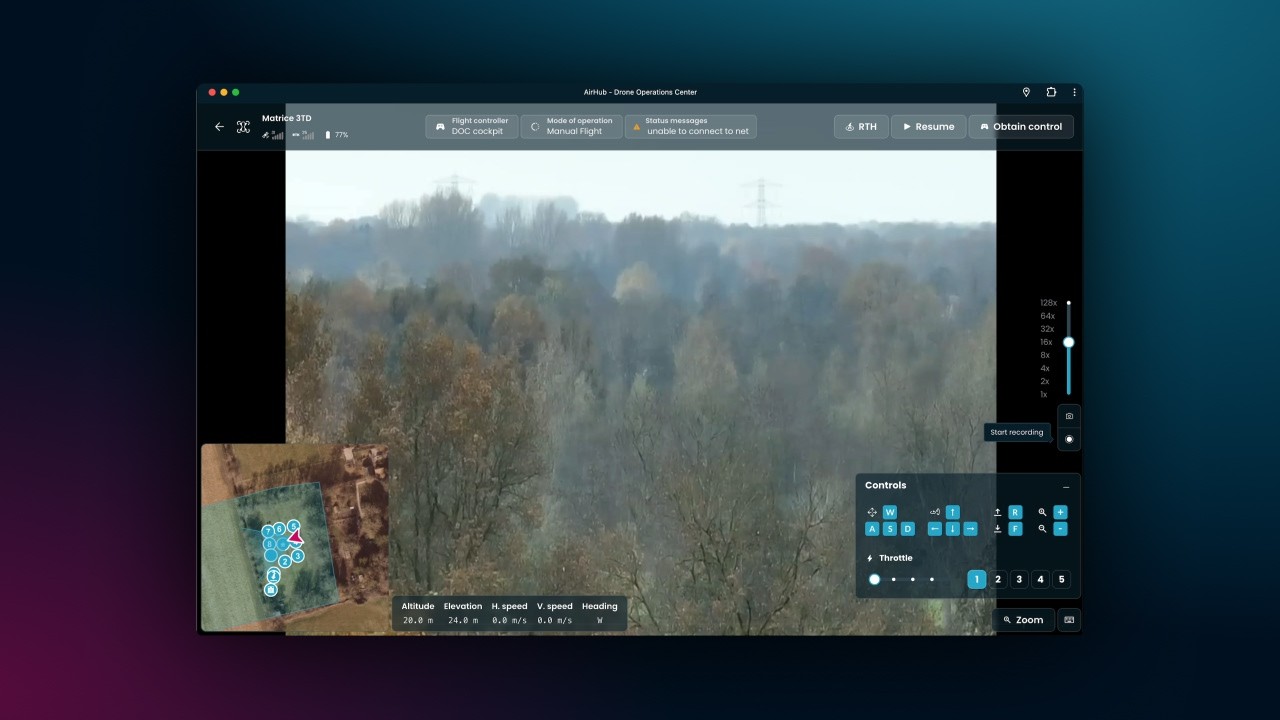
Novidades nas Melhorias do Cockpit
Melhorias no Cockpit & Editor de Missão

Reformulámos a experiência do Groundstation para lhe proporcionar melhor consciência situacional durante o voo e mais precisão durante o planeamento.

Editor de Missão: Direção POI

Concentre-se no que importa. Agora pode definir o Modo Direção para POI (Ponto de Interesse) dentro do Editor de Missão. Basta selecionar uma coordenada específica, e o drone irá automaticamente rodar para enfrentar esse alvo enquanto voa para os seus pontos de passagem—perfeito para inspeções e planos cinematográficos.

Melhorias no Cockpit
  • Novos Widgets de Status: Monitorize instantaneamente Modo Drone e Estado de Controlo com os nossos widgets mais claros e ricos em dados.

  • Sinais Sonoros: Já não precisa de olhar para o ecrã para saber o que está a acontecer. Adicionámos alertas áudio para confirmar eventos críticos, permitindo-lhe manter os olhos na aeronave.

  • Ações Refinadas: As entradas críticas são mais rápidas e confiáveis. Melhorámos os botões Tirar Fotografia, Gravação de Vídeo, Obter Controlo e Pausar Missão.

  • Zoom Térmico: Detalhe encontra dados. Vista térmica está agora totalmente disponível enquanto em modo Zoom. Isto permite-lhe inspecionar assinaturas térmicas com precisão sem sacrificar a vantagem ótica da lente de zoom.

  • Melhor Mensagem: Atualizámos as mensagens da aeronave para serem claras e acionáveis, removendo ambiguidades.

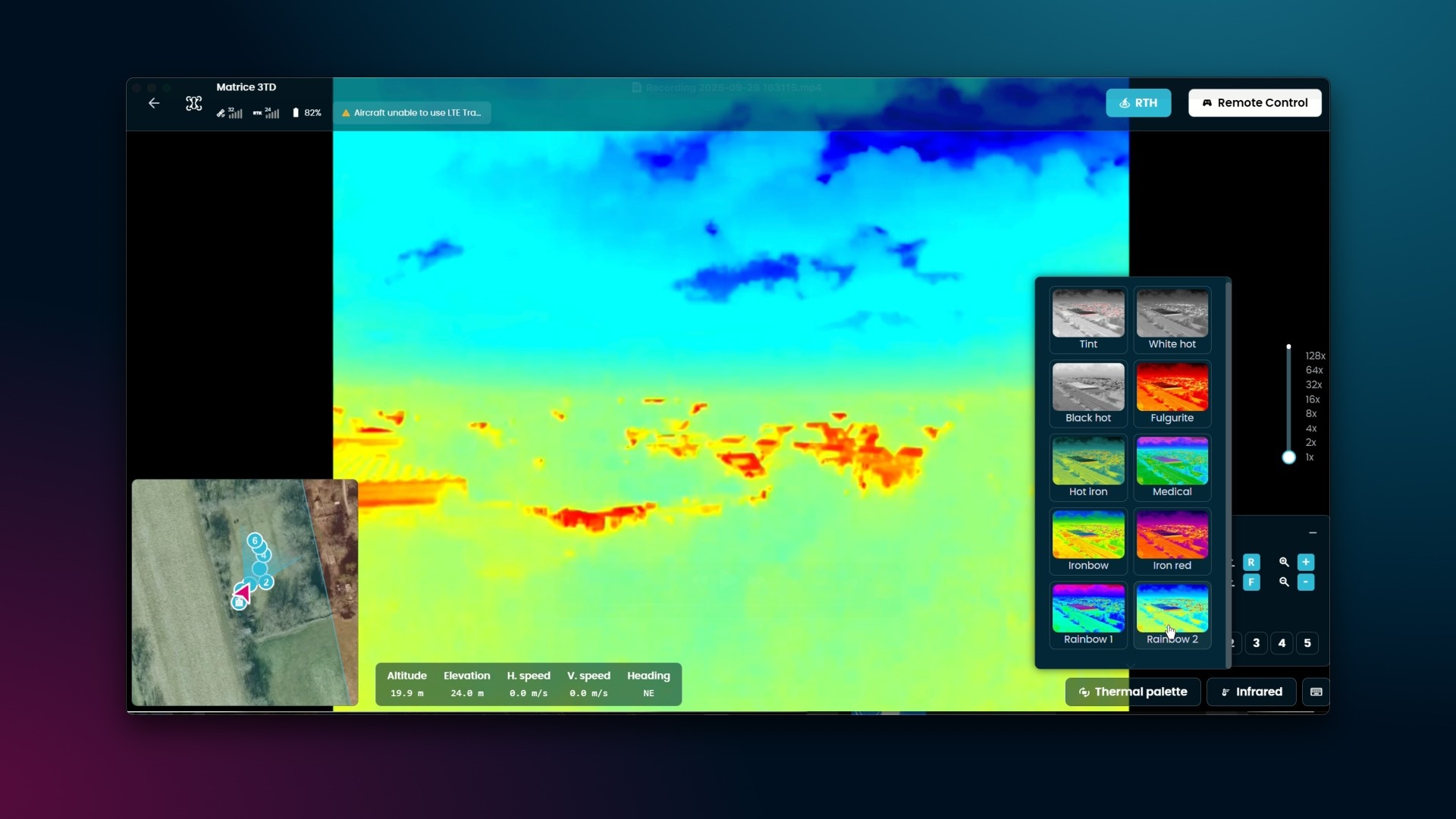
AirHub's Thermal Pallette functionality from their Drone Operations Center
Controle da Paleta Térmica no DJI Dock

Em operações de segurança pública, cada segundo conta e informações claras podem fazer a diferença entre sucesso e fracasso. Estamos lançando uma atualização de software para o DJI Dock que melhora suas capacidades de imagem térmica, proporcionando a você uma ferramenta mais poderosa para buscas e salvamentos, combate a incêndios e comando de incidentes.

Esta atualização oferece controle direto sobre como a câmera térmica visualiza o calor, permitindo que sua equipe se adapte a situações táticas em rápida mudança.

Qual é a Nova Funcionalidade?

Com a atualização mais recente, os operadores agora podem alternar entre diferentes paletas de cores térmicas em tempo real. Em vez de uma única visualização térmica padrão, sua equipe pode selecionar instantaneamente a visualização que melhor se adapta ao ambiente e objetivo da missão.

Por Que Isso É Importante para Missões de Primeira Resposta

Esse controle aprimorado proporciona vantagens tangíveis ao utilizar o DJI Dock em operações de emergência:

  • Detecção Mais Rápida de Sujeitos em Buscas e Resgates (SAR): Encontrar uma pessoa desaparecida é uma corrida contra o tempo. A capacidade de trocar paletas permite que um operador encontre o melhor contraste de cores para destacar a assinatura de calor de um humano contra fundos desafiadores, seja em folhagem densa à noite, num campo de escombros ou em águas abertas. Isso pode reduzir significativamente os tempos de busca.

  • Identificação de Pontos Quentes e Perigos em Incêndios: Para os bombeiros, essa funcionalidade é inestimável. Uma paleta pode ser ideal para penetrar no fumo e identificar o foco do fogo, enquanto outra pode ser usada durante a vistoria para encontrar pontos quentes ocultos em paredes e tetos, prevenindo reignições. Também auxilia na identificação de tanques de material perigoso que possam estar superaquecendo.

  • Consciência Situacional Aprimorada para Comando de Incidentes: Inteligência clara é fundamental para decisões de comando. Ajustando a visão térmica, você pode fornecer aos comandantes as imagens mais úteis, seja rastreando a trilha de calor de um suspeito, monitorando a localização das equipes, ou identificando áreas inseguras para a entrada de pessoal.

  • Redução do Cansaço do Operador em Eventos de Alto Estresse: Durante um incidente prolongado ou intenso, olhar para uma única exibição térmica pode causar fadiga. Permitir que o operador selecione uma paleta que seja mais clara ou intuitiva para ele reduz a carga cognitiva, ajudando-o a permanecer focado e eficaz por mais tempo.

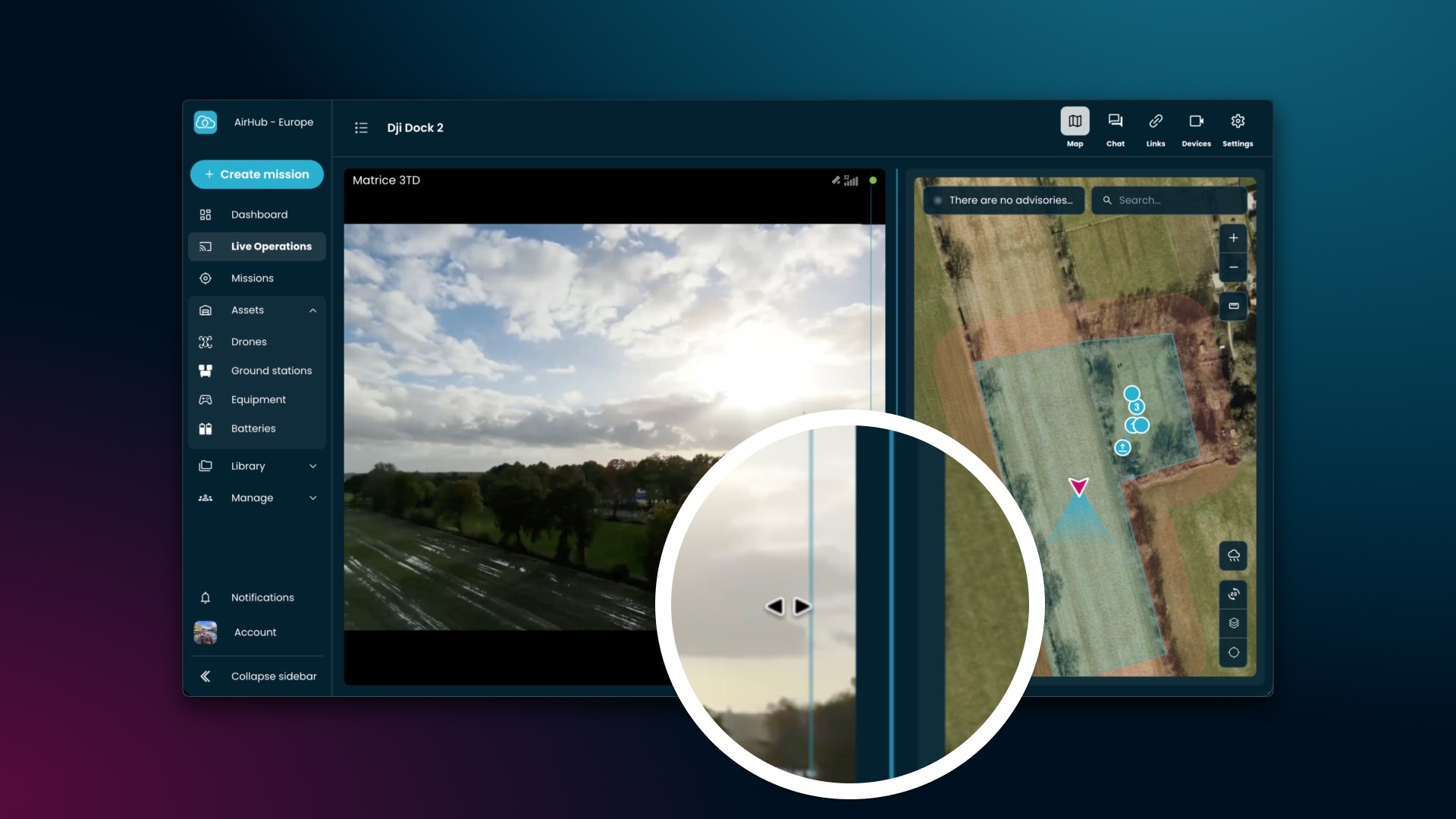
Apresentando os Painéis LiveOps Redimensionáveis
Assuma o Controlo da Sua Operação ao Vivo: Apresentamos Painéis Redimensionáveis no LiveOps

Durante uma operação ao vivo, as suas necessidades informativas podem mudar num instante. Num momento, o feed de vídeo principal é o seu foco principal; no seguinte, está profundamente no registro de bate-papo coordenando equipes terrestres. Para apoiar este fluxo de trabalho dinâmico, estamos entusiasmados em apresentar uma atualização simples, mas poderosa, na interface do LiveOps: painéis redimensionáveis horizontalmente.

Qual é a Nova Funcionalidade?

Agora tem a capacidade de arrastar e deslizar os divisores entre os painéis principais na sua vista LiveOps. Isto permite-lhe alterar dinamicamente o tamanho horizontal do:

  • Painel de Mapa

  • Painel de Transmissão ao Vivo

  • Painel de Bate-papo

  • Painel de Links Compartilháveis

O Propósito: Uma Vista de Operações ao Vivo Que Se Adapta à Sua Missão

Esta funcionalidade destina-se a dar-lhe controle e a permitir que priorize o seu foco com base na tarefa em mãos. Eis por que isto é importante:

  • Foco no Que É Crítico: Se está a pilotar um drone ativamente ou a monitorizar um feed de vídeo crítico, agora pode expandir o painel de transmissão ao vivo para ter uma visão maior e mais detalhada. Pode reduzir os painéis de bate-papo ou links para minimizar distrações e dedicar mais espaço de tela ao vídeo ao vivo.

  • Melhorar a Consciência Situacional: Durante uma busca em ampla área ou ao rastrear múltiplos ativos, o painel de mapa é a sua ferramenta mais importante. Agora pode ampliá-lo para ver mais da área operacional, rastrear ativos mais claramente e revisar camadas de mapa sem zoom ou panorâmica excessivos.

  • Melhorar a Coordenação da Equipe: Quando um incidente requer comunicação e coordenação intensivas, uma janela de bate-papo estreita pode ser frustrante. Agora pode alargar o painel de bate-papo para ver mais do histórico de conversas de relance, reduzindo a necessidade de rolar e ajudando a manter-se a par de mensagens e atualizações rápidas.

  • Simplificar a Partilha de Informações: Se o seu papel principal é gerir informações para partes interessadas externas, pode expandir o painel de links compartilháveis para obter uma visão clara e organizada de todos os links ativos, gerenciar suas configurações e compartilhá-los mais eficientemente.

Esta melhoria na interface do utilizador foi concebida para tornar a plataforma LiveOps mais flexível e responsiva. O seu espaço de trabalho deve funcionar para você, e não o contrário. Com painéis redimensionáveis, pode configurar instantaneamente a sua vista para corresponder às necessidades exatas da sua operação.


Novidades nas Melhorias do Cockpit
Melhorias no Cockpit & Editor de Missão

Reformulámos a experiência do Groundstation para lhe proporcionar melhor consciência situacional durante o voo e mais precisão durante o planeamento.

Editor de Missão: Direção POI

Concentre-se no que importa. Agora pode definir o Modo Direção para POI (Ponto de Interesse) dentro do Editor de Missão. Basta selecionar uma coordenada específica, e o drone irá automaticamente rodar para enfrentar esse alvo enquanto voa para os seus pontos de passagem—perfeito para inspeções e planos cinematográficos.

Melhorias no Cockpit
  • Novos Widgets de Status: Monitorize instantaneamente Modo Drone e Estado de Controlo com os nossos widgets mais claros e ricos em dados.

  • Sinais Sonoros: Já não precisa de olhar para o ecrã para saber o que está a acontecer. Adicionámos alertas áudio para confirmar eventos críticos, permitindo-lhe manter os olhos na aeronave.

  • Ações Refinadas: As entradas críticas são mais rápidas e confiáveis. Melhorámos os botões Tirar Fotografia, Gravação de Vídeo, Obter Controlo e Pausar Missão.

  • Zoom Térmico: Detalhe encontra dados. Vista térmica está agora totalmente disponível enquanto em modo Zoom. Isto permite-lhe inspecionar assinaturas térmicas com precisão sem sacrificar a vantagem ótica da lente de zoom.

  • Melhor Mensagem: Atualizámos as mensagens da aeronave para serem claras e acionáveis, removendo ambiguidades.

AirHub's Thermal Pallette functionality from their Drone Operations Center
Controle da Paleta Térmica no DJI Dock

Em operações de segurança pública, cada segundo conta e informações claras podem fazer a diferença entre sucesso e fracasso. Estamos lançando uma atualização de software para o DJI Dock que melhora suas capacidades de imagem térmica, proporcionando a você uma ferramenta mais poderosa para buscas e salvamentos, combate a incêndios e comando de incidentes.

Esta atualização oferece controle direto sobre como a câmera térmica visualiza o calor, permitindo que sua equipe se adapte a situações táticas em rápida mudança.

Qual é a Nova Funcionalidade?

Com a atualização mais recente, os operadores agora podem alternar entre diferentes paletas de cores térmicas em tempo real. Em vez de uma única visualização térmica padrão, sua equipe pode selecionar instantaneamente a visualização que melhor se adapta ao ambiente e objetivo da missão.

Por Que Isso É Importante para Missões de Primeira Resposta

Esse controle aprimorado proporciona vantagens tangíveis ao utilizar o DJI Dock em operações de emergência:

  • Detecção Mais Rápida de Sujeitos em Buscas e Resgates (SAR): Encontrar uma pessoa desaparecida é uma corrida contra o tempo. A capacidade de trocar paletas permite que um operador encontre o melhor contraste de cores para destacar a assinatura de calor de um humano contra fundos desafiadores, seja em folhagem densa à noite, num campo de escombros ou em águas abertas. Isso pode reduzir significativamente os tempos de busca.

  • Identificação de Pontos Quentes e Perigos em Incêndios: Para os bombeiros, essa funcionalidade é inestimável. Uma paleta pode ser ideal para penetrar no fumo e identificar o foco do fogo, enquanto outra pode ser usada durante a vistoria para encontrar pontos quentes ocultos em paredes e tetos, prevenindo reignições. Também auxilia na identificação de tanques de material perigoso que possam estar superaquecendo.

  • Consciência Situacional Aprimorada para Comando de Incidentes: Inteligência clara é fundamental para decisões de comando. Ajustando a visão térmica, você pode fornecer aos comandantes as imagens mais úteis, seja rastreando a trilha de calor de um suspeito, monitorando a localização das equipes, ou identificando áreas inseguras para a entrada de pessoal.

  • Redução do Cansaço do Operador em Eventos de Alto Estresse: Durante um incidente prolongado ou intenso, olhar para uma única exibição térmica pode causar fadiga. Permitir que o operador selecione uma paleta que seja mais clara ou intuitiva para ele reduz a carga cognitiva, ajudando-o a permanecer focado e eficaz por mais tempo.

Histórias de Sucesso

Histórias de Sucesso

The Bombeiros using AirHub's platform to perform a Search and Rescue mission
Como os Bombeiros Portugueses Utilizam o AirHub para Coordenar Operações de Drones a Nível Nacional

Bombeiros Portugal é a força nacional de combate a incêndios e proteção civil, responsável pela resposta a emergências em incêndios florestais, incidentes urbanos e resgates costeiros. Com uma das maiores redes de drones de segurança pública da Europa, eles utilizam o AirHub para gerenciar operações, garantir conformidade e aprimorar a consciência situacional durante missões críticas.

The logo of the Purtuguese firefighters; the Bombeiros
Bombeiros
Two AirHub crewmembers posing for a photo with the Dubai Police
Como a Polícia de Dubai está Pioneirando o Modelo de Drones como Primeiros Socorristas com a AirHub

A Polícia de Dubai é uma das forças de segurança mais avançadas e inovadoras do mundo, responsável por manter a segurança, aplicar a lei e proteger o bem-estar dos residentes e visitantes em todo o Emirado de Dubai. Operando sob o Governo de Dubai, a força combina deveres policiais tradicionais—como prevenção de crimes, resposta a emergências e segurança pública—com forte ênfase na inovação tecnológica e integração em cidades inteligentes. Reconhecida pela sua abordagem vanguardista, a Polícia de Dubai é líder global na adoção de tecnologias emergentes—including inteligência artificial, robótica e drones—para aumentar a consciência situacional, otimizar operações e permitir respostas rápidas e orientadas por inteligência a incidentes. O seu programa Drone como Primeiro Respondedor (DFR), impulsionado pela AirHub, exemplifica o seu compromisso em moldar o futuro da aplicação da lei através da inovação.

The logo of the Dubai Police
Dubai Police
Imagem de capa da polícia da Bélgica
Como a Polícia Belga Usa Drones para Conscientização Situacional em Tempo Real

A Polícia Belga é uma agência nacional de aplicação da lei responsável por manter a ordem pública, garantir a segurança e fazer cumprir a lei em toda a Bélgica. Opera a níveis local e federal, abrangendo uma ampla gama de tarefas desde patrulhas de rotina e controlo de tráfego até resposta a crises e investigações criminais. Com um foco crescente na inovação, a Polícia Belga integra tecnologias avançadas—como drones—para melhorar a consciencialização situacional em tempo real, aprimorar a coordenação operacional e apoiar a tomada de decisões na linha da frente durante incidentes dinâmicos e em larga escala.

Logótipo da polícia da Bélgica
Belgium Police
The Bombeiros using AirHub's platform to perform a Search and Rescue mission
Como os Bombeiros Portugueses Utilizam o AirHub para Coordenar Operações de Drones a Nível Nacional

Bombeiros Portugal é a força nacional de combate a incêndios e proteção civil, responsável pela resposta a emergências em incêndios florestais, incidentes urbanos e resgates costeiros. Com uma das maiores redes de drones de segurança pública da Europa, eles utilizam o AirHub para gerenciar operações, garantir conformidade e aprimorar a consciência situacional durante missões críticas.

The logo of the Purtuguese firefighters; the Bombeiros
Bombeiros
Two AirHub crewmembers posing for a photo with the Dubai Police
Como a Polícia de Dubai está Pioneirando o Modelo de Drones como Primeiros Socorristas com a AirHub

A Polícia de Dubai é uma das forças de segurança mais avançadas e inovadoras do mundo, responsável por manter a segurança, aplicar a lei e proteger o bem-estar dos residentes e visitantes em todo o Emirado de Dubai. Operando sob o Governo de Dubai, a força combina deveres policiais tradicionais—como prevenção de crimes, resposta a emergências e segurança pública—com forte ênfase na inovação tecnológica e integração em cidades inteligentes. Reconhecida pela sua abordagem vanguardista, a Polícia de Dubai é líder global na adoção de tecnologias emergentes—including inteligência artificial, robótica e drones—para aumentar a consciência situacional, otimizar operações e permitir respostas rápidas e orientadas por inteligência a incidentes. O seu programa Drone como Primeiro Respondedor (DFR), impulsionado pela AirHub, exemplifica o seu compromisso em moldar o futuro da aplicação da lei através da inovação.

The logo of the Dubai Police
Dubai Police