
Client:
Hunze & Aa's
Industry:
Infrastructure
Location:
Netherlands
Purpose:
Managing drone operations for project surveying, inspection and incident response
About:
Waterschap Hunze en Aa's is the water authority responsible for flood defences, water levels, surface water quality and wastewater treatment in the east of Groningen and the north east of Drenthe. Its area is made up of seven separate water systems, each with its own character, and the organisation manages sea dykes, canals, pumping stations and treatment works to keep the region safe and liveable.

For Waterschap Hunze en Aa's, drone work covers two very different jobs. One is planned: surveying new projects and calculating what has been moved. The other arrives without warning, such as an oil slick on surface water that needs to be sized up in minutes. Both run through the same drone operations software, which is what keeps a growing operation organised.
The challenge: specialist flights, and the record-keeping that comes with them
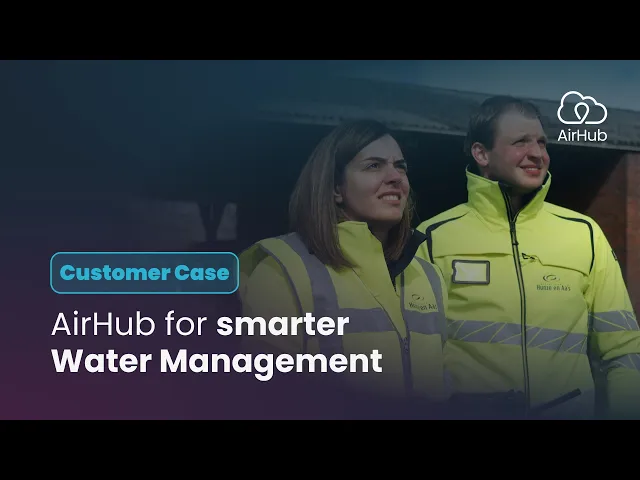
Thomas Berkepies is Drone & Data Operator at Hunze en Aa's, where he handles the specialist flights. Rasa Hassoun-Boiten flies as a drone pilot on project work in the field.
For Rasa, the drone has become a standard part of project supervision:
"As a drone pilot at Waterschap Hunze en Aa's, I use the drones for supervision on new projects. Taking baseline and follow-up measurements with the drones is straightforward, and we can calculate the quantities afterwards."
That kind of work only holds up if every set of measurements is captured properly, because the value sits in the comparison between the first flight and the last one.
Incident response asks something different again. Speed is the whole point. Thomas:
"We deploy drones in incident situations, such as an oil slick on surface water. By sending the drone up quickly, we can see how large the slick is. Based on that, we can screen off the slick and limit the environmental impact."
Around both types of flying sits a third requirement that has nothing to do with piloting. Flights have to be logged for inspections, pre-flight and post-flight checks have to be completed consistently, and documents such as insurance certificates have to be available the moment an inspector asks for them in the field.
The video below shows how the team at Hunze en Aa's works in the field, and how AirHub keeps every flight prepared, documented and ready for inspection.
The solution: drone operations software that runs on the controller
Hunze en Aa's uses AirHub as the central platform for its drone operations. Thomas manages the workspace for the organisation:
"As administrator of the AirHub application within the organisation, I keep track of the flights, so we have a log for any inspections. We also hold all our information in there, such as checklists, and insurance certificates for checks in the field."
For the pilots, the compliance side happens inside the normal flow of a flight rather than after it. Rasa:
"Before the flight, during the flight and after the flight, we can work through all the checklists straight from the AirHub app. Then we know exactly that we are meeting the rules."
Because the app runs on the controller itself, the administrative tail disappears:
"A big advantage of AirHub is that the application runs on the controller. The flight is logged automatically, so we do not have to do that manually afterwards." Thomas Berkepies
Colleagues who are not on site can follow an operation as it happens through live streaming:
"Through the live stream function in the AirHub app, colleagues can easily watch along during inspection flights." Rasa Hassoun-Boiten
The impact: faster fieldwork, less admin and drone operations that are ready for inspection
The gain shows up in three places at once. Flights are quicker to set up and quicker to close out. Colleagues in the office see what the pilot sees, so decisions during an inspection or an incident do not have to wait for someone to get back to a desk. And the flight log builds itself, which means the evidence for an inspection is already there.
Rasa puts the outcome simply:
"I think it is really important that we work much more efficiently by using drones. We save a lot of money and time."
Hunze en Aa's is one of several Dutch water authorities running structured drone programmes on AirHub. Waterschap Zuiderzeeland reached a similar point from a different starting task, and you can read how Zuiderzeeland uses drones for water quality monitoring as well.
Ready to structure your drone operations?
Waterschap Hunze en Aa's shows what happens when planning, checklists, live video and logging sit in one place. Whether you are surveying a project, inspecting infrastructure or responding to an incident on the water, AirHub keeps your operation efficient, compliant and ready to scale.
Book a demo with one of our experts.