•

Nerissa Goedhart
A drone is a flying data platform: where data sovereignty really begins

Stephan van Vuren recently joined a podcast on autonomy in the air, on land and at water. This article draws on that conversation.
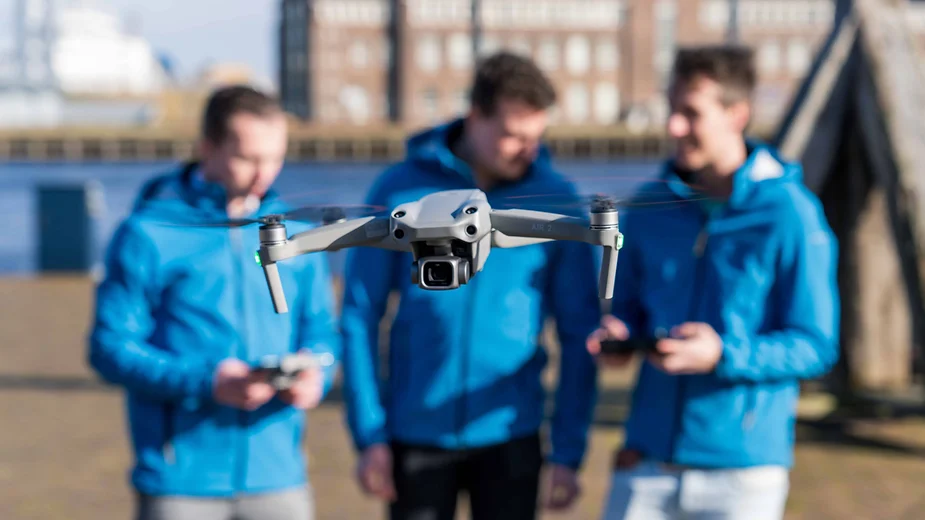
Ask our co-CEO and co-Founder Stephan van Vuren what a drone actually is, and the answer tends to surprise people. It is a tool that happens to fly. The flying draws the attention, along with the aviation rules that come with it, yet the value sits in what the drone collects: video, thermal imagery, sensor readings and position. In practical terms, a drone is a flying data platform.
That reframing moves the hard question. Getting a drone airborne is largely solved. What matters now is who controls the data once it exists, where that data is stored, and which route it travels. For operators in public safety, security and critical infrastructure, data sovereignty has become the decision that shapes everything else.
The drone is a tool that happens to fly
Most of the operational value of a drone is generated in the air. A visual or thermal camera over an incident scene produces a continuous stream, and that stream is only useful if it reaches the people who need it: a control room, a commander on the ground, a partner agency.
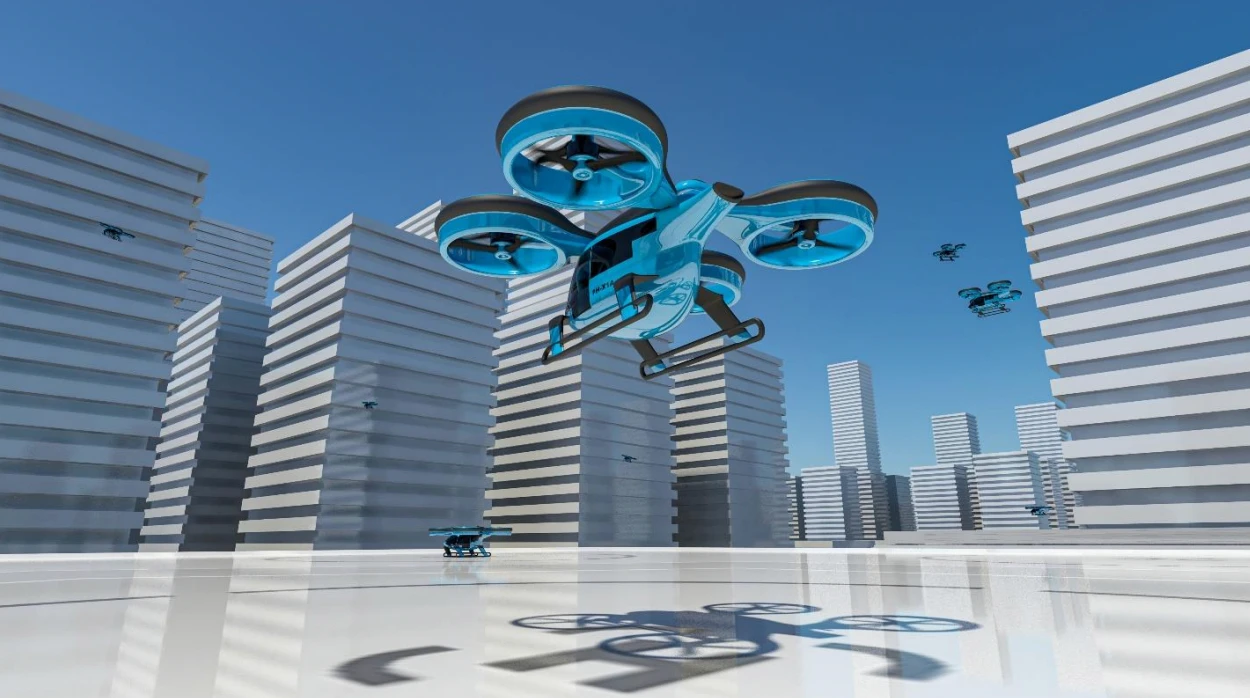
The scale of that data is about to change sharply. Today, many drones are still carried to a site, flown for a single task and packed away again. The next step is the drone in a box: docking stations placed at fixed points that fly around the clock rather than once a day. When deployments move from occasional to continuous, the volume of footage and telemetry grows enormously. How quickly you can process it, and how cleanly you can route it to the right party, becomes the core of the operation.
Data sovereignty means keeping control of your own data
Sovereignty often gets framed as a national flag on a server. In daily operations it comes down to something more concrete: keeping grip on your own data. Who can open it, where it is stored, which route it travels, and which partners you choose to share it with.
For a public safety or critical infrastructure operator, that question has an edge to it. Most civil drone hardware still comes from a small number of manufacturers, and a buyer needs to know that the footage a drone captures stays where it belongs. AirHub is vendor-agnostic, so the platform sits between the hardware and the data and gives the operator the controls: which feeds are stored, where they live, and who is allowed to reach them. This is the purpose of secure data mode, and it is the reason so many buyers now ask where the software itself is built before they ask what it costs. We covered that question in more detail in where AirHub's software is actually built.
Why a European cloud is becoming a baseline requirement
A growing number of organisations want their operational data to stay inside Europe. For police forces, ministries and infrastructure operators, sitting under a non-European cloud is increasingly difficult to justify, both for compliance and for trust.
The practical case is just as strong. Keeping the cloud close shortens the route the data travels, reduces the number of hops along the way, and makes it far easier to see and control where information goes. A reliable European partner running on national infrastructure turns that from a principle into a working setup. AirHub supports private and European cloud deployment so the data comes to rest where the operator wants it, close to where it was captured.
Filter at the edge so only the right data travels
A lot of what a drone records is never needed. If the task is to read a number plate or confirm a single detection, the useful output is small. Filtering on the edge, on the drone itself, means only the relevant event and its metadata cross the network, which keeps bandwidth, storage and exposure low.
Some missions do call for keeping everything, and those cases raise the stakes on a stable connection and a nearby cloud. The principle holds either way: decide what is worth keeping, send what matters, and store the rest under your own terms. The same logic already applies well beyond drones. A camera in a shop or a sensor on a network does not need to record everything forever to stay useful.
Sharing footage between agencies without losing control
Sovereignty is tested the moment two organisations need to work from the same picture. Belgium is a useful example. Policing there is organised into zones, each set up slightly differently, and an operation often needs one zone to work alongside another. Footage generated by one team has to reach another team in a way both can trust.
In practice the technology is rarely the obstacle. A drone feed from one service can be shared with a fire brigade watching on a tablet, as long as there is a browser and an internet connection. The harder part is governance: deciding which data a police unit shares with the fire service, which stays internal, and how that holds up at scale. The Belgian Police run exactly this kind of shared, real-time picture across teams, and the control over what is shared with whom is part of what makes it work.
What data sovereignty looks like inside AirHub
AirHub is built so the operator stays at the controls of their own data. Storage location, access rights and sharing stay decisions the customer makes. For organisations with the strictest requirements, on-premise and air-gapped deployment keeps everything inside their own walls, and the trust center sets out how the platform handles security and compliance.
Control also has to survive a bad day. Connections drop, signals get jammed, batteries run low. In regions like the Baltic states, jamming near the border is a daily reality, and any drone flying there needs to cope with it. That calls for redundancy built into the aircraft: a safe landing routine when the link is lost, and increasingly AI that lets the drone hold its position from its own cameras when the network is unavailable. Sovereignty over your data is only as good as your ability to keep operating when conditions turn against you.
The thread through all of this is straightforward. A drone is a flying data platform, and the organisation that controls the data controls the operation.
Want to see how AirHub keeps your operational data under your control, built around your own requirements? Book a demo and we will walk you through it.