•

Nerissa Goedhart
A drone parachute system is only as good as the operation around it

Image: DJI
When a drone loses power or control, gravity takes over in seconds. A drone parachute system is designed for exactly that moment: a controlled descent that lowers the energy of the impact and reduces the risk to people and property on the ground. For operators flying over populated areas or beyond visual line of sight, it has become one of the most talked-about safety features on the market.
The latest example is DJI's AP100, announced in July 2026 for the Matrice 400. According to the manufacturer, it deploys automatically within a fraction of a second of detecting a critical fault, carries its own backup power so it can fire even if the aircraft loses electrical supply, and runs continuous self-checks on its own components. Systems like it are increasingly tied to the C5 and C6 drone classes that open up flights over crowds and certain BVLOS operations.
All of that is genuine progress. It is also where a common misunderstanding starts. A drone parachute system is a powerful safety layer, and its real value depends on everything around it: how it is maintained, whether it is armed, and whether the operator can confirm its status before every flight.
What a parachute system does, and when it is required
A parachute works by slowing the fall. After a serious failure or loss of control, the canopy opens and the aircraft descends at a controlled rate. A system certified to a standard such as ASTM F3322, the international specification for small-drone parachute recovery systems, gives authorities a known, tested performance to rely on.
That performance is why parachutes now sit inside the rulebook. For higher-risk operations, a certified parachute can be a required feature or a recognised risk-mitigation measure. In the European specific category it supports the C5 and C6 classes, which cover flights in populated areas and certain beyond-visual-line-of-sight operations. In a SORA assessment, a parachute reduces the ground risk, which can influence the robustness you need to demonstrate and, in some cases, the operations you are allowed to run. We covered that framework in our piece on what the June 2026 rules mean for operators.
Where a drone parachute system reaches its limits
A parachute is a safety layer, and like any layer it has conditions attached. Knowing them is what makes a parachute perform on the day it is needed.
Altitude. A canopy needs height and time to open and slow the aircraft. Manufacturers quote a minimum deployment altitude below which the parachute cannot fully do its job. DJI's AP100, for example, gives 30 metres as the minimum effective deployment altitude for a controlled descent, and warns that below that height it will still eject but may not inflate in time. Many incidents happen close to the ground during take-off and landing, exactly where that margin is thinnest.
Arming and human factors. A parachute that is switched off, or never armed, cannot deploy. The most advanced system on the market is inert if nobody confirmed it was active before take-off.
Maintenance and packing. A canopy that is poorly packed, out of its service interval, or damaged will not perform as certified. Parachutes need the same maintenance discipline as any other critical component.
Wind and drift. Once under the canopy, the aircraft drifts with the wind. Over a road, a crowd or water, where the drone comes down still matters, even at a safe descent rate.
The aircraft is still a falling object. A parachute lowers impact energy. It does not remove all risk, and it is not a substitute for keeping people out of the operational area in the first place.
None of this argues against parachutes. It argues for treating them as one deliberate part of a wider safety system, backed by procedure and verification.
Making a drone parachute system part of the checklist
This is where software earns its place. The parachute is hardware, and the assurance that it will work is operational.
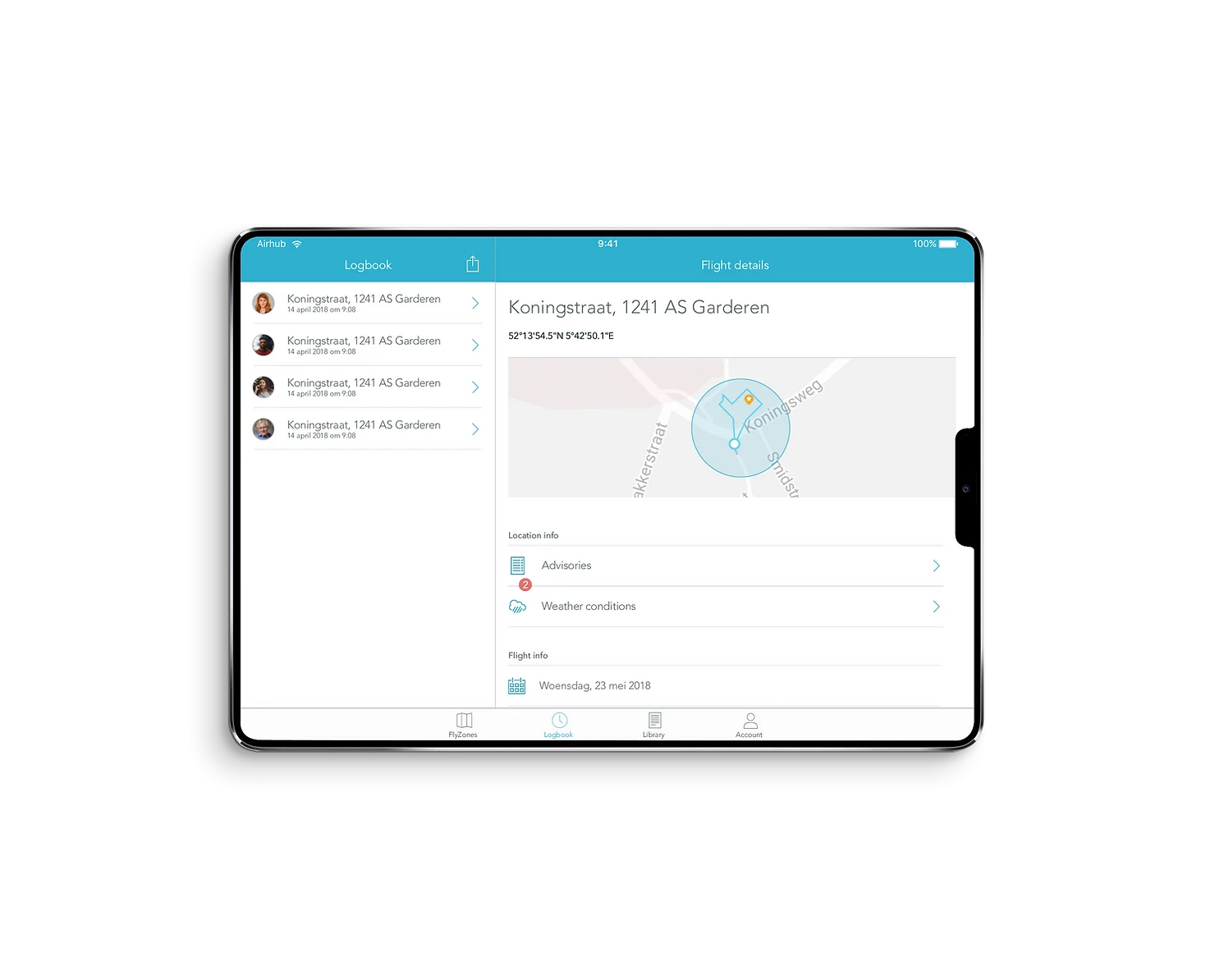
The single most effective habit is to make parachute status a fixed item on the pre-flight checklist, checked and confirmed on every flight, the same way a pilot confirms battery, GPS and payload. On a well-run platform, that check is a step the operator completes and records, so there is a trail showing the system was armed before the aircraft left the ground. AirHub builds that discipline into the pilot and ground control tools, so the checklist travels with the operator.
It also helps to see the state of the system at a glance. When parachute status is visible in your live operational picture, a control room or a commander can confirm that safety systems are active across every aircraft in the air, not just the one in front of them. For fleet and dock-based operations, where a drone in a box may fly around the clock with nobody standing next to it, that visibility moves from useful to essential. If a system is disabled, you want to know before the mission starts.
Planning plays a part too. The minimum deployment altitude of your parachute shapes how you plan a route and where you set your operational volume and ground risk buffer, all of which live in the mission plan.
The bigger safety picture
A parachute is one honest layer of protection, and recent systems keep getting better: faster deployment, redundant power, self-diagnostics, and audible and visual alerts that help people nearby react and help you find the aircraft afterwards. Those are real gains.
The outcome on the day still depends on the operation around the hardware. A maintained system, armed and confirmed on a checklist, visible in your operational picture, and planned into the flight, is what turns a parachute into dependable safety.
At AirHub we build the software that carries that safety discipline through the whole operation, from the pre-flight checklist to the live picture in the control room. If you want to see how parachute status and your wider safety checks fit into one operational view, book a demo and we will walk you through it.