The EASA regulation for UAS will be coming into force on the 31st of December 2020 and from that moment many commercial drone operations will be conducted within the Open Category. But what types of operation are possible within this category? And what requirements do you have to fulfil when operating within this category?
With the introduction of the European legislation it will no longer be possible for drone operators to apply for an operational authorisation under their national legislation. Instead they will have to fulfil the requirements of the #EASA Open or Specific Category. But how do you determine if your operations falls within the Open Category? And when you can operate in this category, what requirements do you have to fulfil?
Operations within the Open Category
The Open Category is basically a framework that is dived into three subcategories. To determine if your operation falls within one of the subcategories of the Open Category you will first have to check if you can perform your flights within certain limitations, for example:
Your operation can only be conducted up to 120 meters above surface level
The maximum take-off weight of your drone must be less than 25 kgs
Your operation may only be conducted within Visual Line Of Sight (VLOS)
You do not carry dangerous goods or drop any material from the drone
You do not fly over assemblies of people
If this is the case there is a big chance you can operate within one of the subcategories (A1 - A3) of the Open Category. However, there are a few limitations depending on the weight of your drone. One of the most limiting factors is the safe distance that you have to keep from uninvolved people and urban areas.
The table below provides a clear overview of the three subcategories within the Open Category and the associated weights.

So what can we extract from this table? When we take a closer look we will see that the following types of operations are allowed within the Open Category:
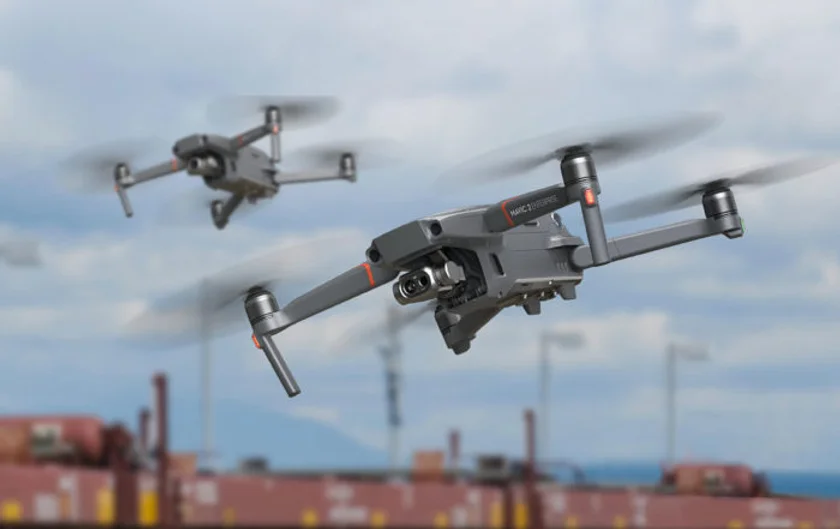
Flights over uninvolved people with drones lighter than 900 grams, e.g. flying your DJI Mavic Air within a residential area
Flights at a safe distance (more than 30 meters) of uninvolved people with drones lighter than 4 kgs, e.g. mapping a construction site with a DJI Phantom 4 RTK
Flights at a safe distance (more than 150 meters) from urban areas (such as residential-, recreational and industrial areas) with drones lighter than 25 kilograms, e.g. performing a coastal surveillance flight with a Matrice 300
As we can see this offers a lot of potential for many different types of operations. However, national (aviation) authorities are allowed to designate certain zones as "Specific Category Only". These zones, for example areas around airports or heliports, will be shown on an airspace map - such as the one available in our AirHub Drone Operations Center. This may limit your operations within the Open Category and force you to operate in the Specific Category.
Now that we know when an operation takes place within the Open Category we will take a look at how you can determine the requirements you will have to fulfil when operating within this category.
General requirements
Operating your drone within the Open Category means you have to abide by some general rules and you will have to fulfil certain requirements. And depending on the subcategory (A1 - A3) you will operate in, additional rules and requirements will apply (which we will explain in the below).
The first thing you have to do when planning to operate your drone in the Open Category is register yourself or your company in the national registry. This is mandatory for all drones that weigh more than 250 grams or have a camera on board (unless it is a toy).
After registering it is time to develop operational procedures that are adapted to the type of operation and the risk involved. As a minimum, these should include:
Procedures on how to operate the UAS in accordance with the user's manual provided by the manufacturer, including any applicable limitations;
Guidelines to effectively use and support the efficient use of radio spectrum in order to avoid harmful interference;
Guidelines how to designate a remote pilot for each UAS operation;
Procedures to ensure that the remote pilots and all other personnel performing a task in support of the operations are familiar with the user's manual provided by the manufacturer of the UAS;
Competency requirements for the remote pilot(s) and for personnel other than the remote pilot, a description of in-house on-the-job-training courses;
Procedures how to check and update information concerning any geographical zones in the geo-awareness system when applicable according to the intended location of operation; g) Procedures how to comply with the operational limitations in geographical zones;
Procedures to ensure that the UAS is in a condition to safely complete the intended flight, and if applicable, check if the direct remote identification works properly;
Procedures to verify that the mass of the UAS does not exceed the MTOM defined by the manufacturer or the MTOM limit of its class - if the UAS is fitted with an additional payload; j) Procedures to ensure in the case of an UAS operation in subcategory A2 or A3, that all involved persons present in the area of the operation have been informed of the risks and have explicitly agreed to participate.
Procedures to observe the operating environment, check the presence of obstacles and check the presence of any uninvolved persons;
Procedures to check if the remote pilot is not performing duties under the influence of psychoactive substances or alcohol or if he/she is unfit to perform its tasks due to injury, fatigue, medication, sickness or other causes;
Procedures how to keep the drone in VLOS and maintain a how to perform a thorough visual scan of the airspace surrounding the unmanned aircraft in order to avoid any risk of collision with any manned aircraft;
A procedure on how to discontinue the flight if the operation poses a risk to other aircraft, people, animals, environment or property; o) If the remote pilot is assisted by a visual observer, a procedure to ensure clear and effective communication between the remote pilot and the visual observer.
A procedure preventing the remote pilot to fly close to or inside areas where an emergency response effort is ongoing, unless you have permission to do so from the responsible emergency response services.
A procedure to fly higher than 120 meters when operating close to an object (within 50 meters) - up to a maximum of 15 meters above the object on request of the administrator.
When we look at the required procedures above we can distinguish a clear difference between commercial operations - companies with personnel other than the remote pilot - and operations performed for recreational purposes. For recreational operations, operating in accordance with the user manual of the drone will normally be enough, commercial operators however will probably want to set up an Operations Manual for their operation.
Now it is time to take a closer look to the rules and requirements for the three subcategories within the Open Category.
Operations within subcategory A1
As we can see in the table above you are allowed to operate drones with a maximum take-off weight (#MTOW) less than 900 grams in this subcategories. These drones normally have a C0 or C1 CE-marking. The difference however is that, to fly a drone heavier than 250 grams in this category (C1) you will need to complete an online training and test before you are allowed to operate.
And where you are allowed to intentionally overfly uninvolved people with drones C0 lighter than 250 grams, this is not the case for C1 drones between 250 - 900 grams. With these drones there must be reasonable expectation that no uninvolved person will be overflown. And in the event of unexpected overflight of uninvolved persons, you shall reduce as much as possible the time during which the drone overflies those persons.

Operations within subcategory A2
In subcategory A2 you are allowed to operate drones up to 4kg, these drones will have a C0, C1 or C2 CE-marking - the latter are the ones between 900 grams and 4 kg MTOW. When flying a C4 marked drone you will have to make sure the UAS operations takes place at a safe horizontal distance of at least 30 metres from uninvolved people. However there is an exemption to this when you operate with an activated low-speed mode (max 3 m/s). In this case the minimum distance is reduced to 5 meters when the weather conditions, obstacles in the area and performance of the drone allow it.
Just like when operating a C1 drone in the A1 subcategory, you will need to complete an online training and test to operate with C2 drones in the A2 category. However, you will also need to complete a practical self training and a theoretical test at a recognised (governmental) facility.
Operations within subcategory A3
Again looking at the table above we see that the A3 subcategory is a little bit more restrictive than the other subcategories but that it allows you to operate much heavier drones - up to 25 kgs. These drones will be marked with either a C0 to C4 CE-marking, but you are also allowed to operate drones that have been privately build (e.g. model aircraft).

Flights within this subcategory have to be conducted in an area where the remote pilot reasonably expects that no uninvolved person will be endangered within the range where the unmanned aircraft is flown during the entire time of the UAS operation. This means you have to keep a safe horizontal distance of at least 150 metres from residential, commercial, industrial or recreational areas.
Fulfilling the requirements
Now that you know how to assess if your operations falls within the Open Category and you know how to determine the requirements and rules applicable to your operation it is time to fulfil these rules and requirements. So how can you do this? This is were we come in at AirHub.
How AirHub can help
At AirHub we have guided many organisations across various industries with setting up a safe, efficient and compliant drone operation. Contact us to take advantage of the experience and expertise of our consultants and trainers. Our consultants will help you with setting up procedures specific to your operation. Our trainers will help your crew get certified and will train them in safely conducting your type of operation. And with our AirHub Drone Operations Management platform you will be able to efficiently plan, execute and manage your drone operations.