
Stephan van Vuren

Stephan van Vuren

SORA 2.5 was meant to make life easier for drone operators. For critical operations in Europe, it may be doing the opposite.
An image that is saying SORA 2.5 including relevant icons related to drones

When SORA 2.5 was introduced into the EASA framework, the message was clear: this update should make the authorisation process more consistent, reduce room for interpretation, and lower the evidentiary burden for many lower-risk operations. EASA explicitly presented SORA 2.5 as a simplification step, particularly through clearer text, more harmonised implementation, less evidence for many low-risk VLOS cases, and more flexibility around containment. 

That ambition is understandable. And in some parts of the market, it may well help.

But from where I stand, especially looking at public safety, security and critical infrastructure operations, the practical outcome is more mixed. In some cases, it is even moving in the wrong direction.

Because the operators that matter most for Europe’s resilience are not the ones flying the simplest missions. They are the ones trying to build repeatable, cross-border, operationally meaningful drone capability. Think of energy companies, port operators, railway and utility operators, security providers, and public authorities that need drones as part of day-to-day operations. These organisations rarely operate in a single location, in a single country, under a single local interpretation. They operate across borders, across infrastructures, and across regulatory cultures.

And that is exactly where Europe still makes life unnecessarily hard.

One of the big ideas behind SORA 2.5 was to improve consistency. That is also visible in the development history: changes included a move from a more qualitative to a more quantitative ground-risk approach, a restructuring of the methodology, and efforts to reduce ambiguity in how the assessment is built. JARUS’ own summary of changes highlights, for example, the introduction of a more quantitative ground-risk model, the removal of VLOS/BVLOS criteria from Step #2, and a new M1b for VLOS operations. 

On paper, that sounds like progress.

In practice, however, critical infrastructure operators do not experience regulation on paper. They experience it through authorisation lead times, authority feedback, local interpretations, documentation burden, and the feasibility of scaling a concept from one site or country to another.

And here SORA 2.5 does not solve the underlying European problem.

The problem is not only the methodology itself. The problem is that Europe still applies a supposedly harmonised framework through fragmented national lenses.

EASA’s own cross-border guidance makes that clear. For operations in the specific category that are not covered by a standard scenario, an operator must first obtain an operational authorisation from the authority in its state of registration, and then separately provide documentation to the authority in each state of operation, including the original authorisation, updated mitigations where needed, and evidence of compliance with local conditions. The authority in the state of operation then assesses that documentation before the operation may start. 

That may be defensible from a legal and sovereignty perspective. But from an operational and economic perspective, it is a major brake on scale.

For a pan-European energy company, this means that a drone concept proven in one country is not automatically portable to another. For a security company operating across multiple sites, it means duplicate work and duplicated uncertainty. For public safety organisations, it means slower deployment of capabilities that everyone agrees are valuable. And for innovative European operators trying to build BVLOS services, it means that every national border still feels like a regulatory reset.

Yes, there is a route around some of this: the Light UAS Certificate (LUC).

But here again, the theory is better than the practical reality. A Light UAS Operator Certificate can indeed grant self-authorisation privileges, including for PDRA-based operations and, depending on the privileges granted, even broader self-authorisation. 

The issue is that for many operators, especially outside the largest and most mature organisations, the LUC remains a very high threshold. It demands organisational maturity, process discipline and regulatory investment that many perfectly serious infrastructure or security operators do not yet have the time or scale to justify. In other words, Europe offers a pathway to flexibility, but often only after asking industry to climb a mountain first.

That would be easier to accept if the reward at the end was a genuinely scalable European market.

But it is not. Even with harmonised EU rules, operators still run into different national expectations, different evidentiary standards, different interpretations of proportionality, and different levels of comfort with BVLOS concepts. SORA 2.5 may have clarified the framework, but it has not removed the operational friction that matters most.

And this matters because BVLOS is not a niche issue anymore.

For critical infrastructure, BVLOS is often the business case. It is what enables long linear inspections, remote asset monitoring, automated drone-in-a-box deployments, faster emergency response, and efficient scaling over large industrial footprints. Without workable BVLOS, the productivity and safety benefits of drones remain capped. Europe talks a lot about innovation, resilience and strategic autonomy, but we should be honest: if BVLOS remains this fragmented and difficult to scale, we will continue to lose momentum to markets that are more pragmatic in how they operationalise advanced drone use cases.

That comparison with the United States is uncomfortable, but necessary. Europe often has the better theoretical framework. What it lacks is the same level of operational pragmatism and consistency in execution.

My concern is that SORA 2.5 risks being remembered as an improvement for regulatory structure, but not necessarily as an improvement for operational reality.

For lower-risk VLOS operations, some simplification may well be real. EASA explicitly says so. But the sectors that Europe should be enabling most urgently, public safety, security and critical infrastructure, depend disproportionately on operations that sit outside that comfort zone. They need scalable BVLOS pathways. They need faster and more predictable cross-border recognition. They need authorities to interpret proportionality in a way that supports essential operations instead of treating each one as if it were the first of its kind. 

So my call to EASA and the national aviation authorities is straightforward.

If Europe is serious about resilience, strategic autonomy and the protection of critical infrastructure, then it needs to regulate those drone applications accordingly.

That means being more pragmatic, not less.

It means creating a more workable pathway for repeatable BVLOS concepts across Member States. It means reducing the practical burden of cross-border specific-category operations. It means recognising that a mature critical infrastructure operator with proven procedures should not have to start from scratch every time it crosses a border. And it means lowering the real-world barriers between safe operations and scalable deployment.

SORA 2.5 was supposed to make life easier for drone operators.

For the operators that matter most to Europe’s critical future, that promise is still far from fulfilled.

If anything, this is the moment not just to refine the methodology, but to finally apply it with the pragmatism that Europe’s market has been missing for years.

If you are operating drones in critical infrastructure, public safety or security and are navigating the practical challenges of SORA and cross-border authorisations, we would be glad to think along with you. Explore how AirHub supports complex drone operations. Book a demo to see the platform in action.

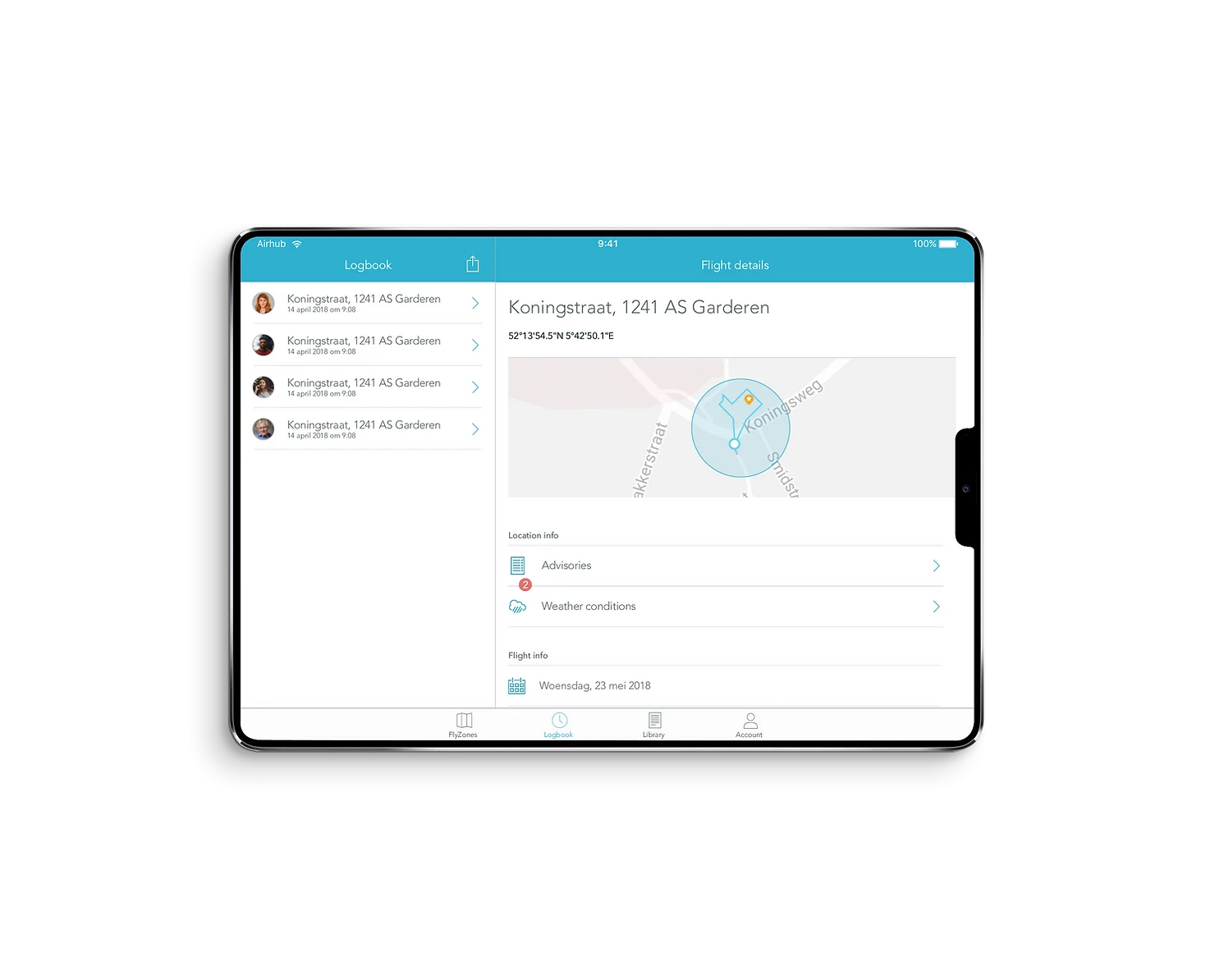
Ready to see AirHub in action?

Book a demo and find out.

Related articles

A magnifying glass describing an audit of the CAA

Content

What to Expect During an Audit of the CAA

Since the introduction of the EASA legislation and regulations, your Civil Aviation Authority (CAA) has decided to audit drone operators on a regular basis. A date is agreed upon for this visit, during which CAA will come by to carry out the audit. Various topics are discussed during this audit. This includes checking documents, viewing flight logs, asking function-specific questions, et cetera. In this blog, we'll discuss this in more detail so that you're always ready for an audit.


Why are the audits done?

Audits are common in the world of (manned) aviation, without them aviation would be a lot less safe. It's important to understand what happens in practice, what works and what doesn't. They're always looking for how the legislation and regulations can be further improved. This has been done for manned aviation for decades, but is still fairly new for unmanned aviation. The CAA also comes by to learn for itself. This is to see how, for example, the approved procedures in the manual are carried out in practice.


What happens during an audit?

During an audit, inspectors from the CAA visit the site. During this visit, they check if the processes and procedures in the manual are carried out as described. They'll check the documents (such as training and insurance certificates), view the flight logs and ask substantive questions to the responsible persons. For this reason, the people with the following positions must be present:

  • Accountable Manager

  • Flight Operations Manager

  • Safety Manager

The CAA will try to do an audit when a flight is planned. This way they can see how it's implemented and if everything is going according to procedure. If it's not possible to plan this during a flight, they'll check the most recently operated flight or ask you to plan a (potential) flight.


What questions can you expect?

The questions asked by the CAA will concern various subjects. The most important questions will be about the content of the manual. They'll check if you know how to apply the manual in practice, and if you know the appropriate protocols and procedures. The questions may also concern EASA legislation and the conversion from national to European legislation.

Each position within the organization also comes with a different set of questions, as each position also has a different set of tasks. The questions will thus be tailored to the tasks the person handles. For the Safety Manager this can, for example, concern how incidents and accidents are dealt with, when and how this is reported and whether this is done in accordance with the guidelines of European legislation.


Which documents are checked?

During the audit, the CAA will check for the operational obligations. This includes the following documents:

  • Emergency Response Plan

  • Operational Plan(s)

  • Checklists, Operational Manuals (e.g. A and B)

  • Flight Logs

It's also important to have the management of (internal) incidents in order during an audit. This includes noting which incidents and accidents have occurred, and how these were dealt with (implementation of improvements).

Finally, they'll check if the maintenance of your drones is up-to-date. For example, what maintenance has been carried out in the past, whether the drones that will fly are current, and what maintenance is scheduled for the future.


How do you ensure that you are always ready for an audit?

Make sure you always have all the necessary documents in order, keeping them up-to-date will save you a lot of work. The workflow within the AirHub software ensures that many of the necessary documents are ready for you. Everything comes together in one organised and structured place. From the automatic logging of flight to having all your checklists and documents in order.

As soon as the documents have to be transferred to the CAA, you can export everything to a PDF document with the click of a button.

If you have any additional questions after reading this blog, make sure to reach out to us! Fill in the contact form or schedule a demo if you're curious about what our software can mean for your drone operations.

AirHub's Drone Operations Center

Content

Safety and Compliance Go Hand in Hand

Safety is one of the top priorities in aviation, including drone operations. Risk-based operational assessments (such as SORA in the drone industry) with corresponding mitigations in the Operations Manual, training, checklists, etc. contribute to the high level of safety that has been achieved in manned aviation. To start operating Unmanned Aircraft Systems (UAS), you are also required to comply with regulations set by international, such as EASA and the FAA, and national authorities. However, being, and more specifically staying, compliant might be an underestimated part of drone operations.

In the (manned) aviation industry, it has been proven that efficient and effective data collection and processing are critical to enable safe operations. Data collection is one of the key elements that is part of a compliant organisation. The Federal Aviation Authority (FAA) has defined a compliancy philosophy, which emphasises the need for collaboration within the aviation community, and organisations in it, to share data about safety issues. One of the goals of this philosophy is to identify safety issues that underlie deviations from standards. The next step is to correct these issues efficiently and effectively in the shortest time span.


Why do we want to achieve a ‘logging culture’ in drone operations?

To stay compliant, you are required by law to log your flights. The European authority EASA requires that all flight operations should be (electronically) logged for a period of two years by the UAS operator. The required data includes all flight characteristics, incident or accident reports and maintenance logs. But there are more arguments to consistently log your drone operations.


Operational logging

In manned aviation, almost every pilot keeps a logbook. A logbook is the indispensable diary of a pilot’s training, career, and flight journeys. It not only records where a pilot has flown, but also who he or she has flown with, the number of hours, how many landings were undertaken, the kinds of instrument approaches and what kind of airplane he or she was flying in. Due to the short flight times in drone operations, logging all your flights can be a struggle for operators. However, remember that you do not only log your flights because it is required by law, but also because it is your own ‘proof of experience’!

We know that ‘it is better to be safe than sorry’, so regularly maintaining your fleet of drones and all other equipment will increase safety across your organisation. Insights in the history of your drone can be very useful to look ahead for any component replacements. It will save you time and costs by being prepared for your drone’s maintenance activities. So, it is also essential from an operational and technical point of view to log your drone operations within your organisation.


Incident or Accident logging

Lastly, Civil Aviation Authorities require you to report any incidents or accidents related to your drone operations. Types of reports can be, but are not limited to, incidents such as unsafe or special situations in the air (e.g. a near collision with other aircraft). Therefore, the ‘Just Culture’ principle is essential in your organisation. In the manned aviation industry, it has also taken some years to accept this as normal working practice in day to day operations. The principle of ‘Just Culture’ supports learning from hazards (including incident or accidents) through structural sharing of safety information - instead of blaming the person(s) who caused it - to prevent future accidents. So, besides meeting legal requirements, logging and reporting also enhances your company’s safety culture.


How AirHub can help

At AirHub we have guided many organisations across various industries with setting up a safe, efficient and compliant drone operation. We can deliver a combination of consultancy and online tools to get your operation approved by the CAA, but also to stay compliant. AirHub's Ground Control Apps enable you to instantly log all flight times, schedule maintenance actions and report incidents in the field. But the mobile applications for iOS and Android are not limited to the required logging of personal flight hours, also management of teams, maintenance reporting and incident management are features that are used a lot. You can download the free AirHub application or log in to the online Dashboard to encourage a ‘logging culture’ in your organisation. By downloading the app you will not only have an easy to use and comprehensive drone logbook, but also a complete compliance system for your drone operations. Our enterprise customers will furthermore profit from advanced features such as live streaming, AI recognition and even remote operations.

A drone operator sitting behind a monitor with a flight simulator open

Content

Online and Practical Drone Training for the Enterprise

Why having a properly trained and qualified crew is essential to setting up a safe and SORA compliant drone operation at your company.

Building a safe and efficient drone operation is not only about having the right equipment and procedures. Probably the most important thing is to have your crews gain the necessary experience and expertise in what they are doing. Providing them with high quality theoretical and operation specific practical drone training is crucial when it comes to this.

Together with our training partners AirHub can ensure that your flight crews receive the right standardized #training for operations in the European Open and Specific categories. Our team of experienced ground school and flight training instructors will develop a custom training program specific to your company's needs.


Custom Made Online Training

European legislation dictates that when flying a drone within the airspace of the member states, you - the operator - must have sufficient knowledge on the applicable regulations and other subjects such as navigation and meteorology. Depending on if you are operating in the Open or Specific category various requirements will be applicable to your drone operation.

Setting up a comprehensive training syllabus for your flight crew is essential for a successful drone operation.

When operating your drone in the Open category you will need to know in which geographical #zones you are allowed to fly, what the applicable rules are for the different subcategories (A1 - A3) you can fly in and where to #register your drone. You will also want to know what the requirements are for electronic #identification and geo awareness for the class of drone (C0 - C4) you are operating. To get you ready for the legally required tests, our online training for the Open category will guide you through subjects like:

  • Air safety and Aviation regulations

  • Airspace structure concepts

  • Human performance limitations

  • Meteorology and Navigation

  • Operational procedures

  • UAS flight performance

  • UAS general knowledge

  • Privacy and data protection

  • Insurance and Security

When operating within the Specific category the level of theoretical knowledge and practical skills required strongly depends on the type of operation you want to conduct. Depending on the SAIL level that results from the #SORA analyse you have completed, different requirements will be set for your ground school training. That is why we have developed a modular online training course that can be adjusted to your specific needs. The basis of this online training covers subjects - above those in the Open category - that are required by all operations within the Specific category:

  • Application of operational procedures (normal, contingency and emergency procedures)

  • Communication, Multi Crew Coordination (#MCC) and Crew Resource Management (#CRM)

  • UAS flight path management and automation

  • Leadership, teamwork and self-management

  • Problem solving and decision-making

  • Situational awareness and workload management

  • Coordination and handover of control

Depending on the type of operation you will be conducting you can then add extra modules to your training course. So if you want to operate within a #CTR with #UTM service for example or fly Beyond Visual Line Of Sight (BVLOS) you can add these modules to your training course. All the modules are presented in an easy to access online video by experts in their field, so you can take full advantage of their experience and expertise.

At AirHub we will create a custom online training specific to your flight crew's needs.


Operation Centric Practical Training

Just like every company is different, every #drone operation is different as well. Our flight training instructors will help you develop an internal training syllabus suited for your flight crew and maintenance personnel and will provide them with the initial training needed to get certified. We have developed many programs for various sectors including:

  • Visual and Thermal Industrial Inspections

  • Aerial Photography and Video for Broadcast and Media

  • Aerial Mapping and Modelling for Construction and Engineering

  • Agricultural Crop Analyses

  • Emergency Response Training for Fire and Police departments

With our custom on-site training, we will make sure your team receives the appropriate experience that is relevant to them. We can train in any country in Europe, so it is up to you to set the location, date, time, and topics depending on what works best for your team.


Management Training

Setting up a drone operation does not only affect the personnel directly involved with flying the drones but also the management of the company. Our consultants can guide the directors and managers at your organization in the implementation and management of your drone program. Trough our coaching and training you will be able to get the highest return on investment from your drone operation as quickly as possible.


How AirHub can help

At AirHub we have guided many organizations across various industries with setting up a safe, efficient and compliant drone operation. Contact us to take advantage of the experience and expertise of our consultants and trainers. They can help you develop and validate your training syllabus and verify the competencies of your flight crew. And with our AirHub Drone Operations Management platform you will be able to gain a comprehensive insight into your training needs.